


Introduction
The future of asset verification is being revolutionized by artificial intelligence (AI), drones, the Internet of Things (IoT), and automation. These technologies are transforming tedious physical asset audits into faster, data-driven processes with real-time accuracy. CFOs, audit heads, and IT asset managers can expect a shift from infrequent manual checks to continuous, automated asset tracking that improves compliance and reduces costs. In this blog, we explore how AI, drones, IoT, and automation are reshaping fixed asset verification, and what these trends mean for enterprise asset management.
In this article, you will learn:
- How AI and automation are changing asset audits: From AI-driven asset recognition to automated reconciliation, reducing human effort and errors.
- How drones enable rapid physical verification: Using autonomous drones for warehouse and site audits to scan assets quickly and safely.
- How IoT sensors enable real-time asset tracking: Continuous monitoring of assets via smart tags, providing up-to-date audit records.
- How to prepare for an automated asset audit future: Strategies for organizations to adopt these technologies and stay audit-ready.
How is AI transforming asset verification?
AI makes asset verification smarter by automating identification, validation, and anomaly detection. In practice, AI-powered software recognizes assets, cross-checks records, and flags discrepancies instantly. As a result, it reduces ghost assets by catching errors humans overlook. Moreover, machine learning matches serial numbers, detects duplicates, and alerts auditors.
Traditional audits often rely on incomplete asset records and outdated spreadsheets, increasing compliance risks and inaccurate valuations. However, AI in asset management helps bridge these gaps by quickly reconciling asset data with physical records. Rather than replacing auditors, AI handles repetitive checks and enhances human judgment, enabling professionals to focus on deeper analysis and deliver more accurate, audit-ready results.
Enterprises are rapidly adopting AI for physical operations – over 58% of companies now use some form of “physical AI” (like AI-guided devices) and this is expected to reach 80% within two years. This trend reflects a growing trust that AI-driven tools can enhance audit processes without sacrificing control.
Key AI applications in asset verification include:
-
Image recognition for asset ID:
AI can read asset tags or serial numbers from photos and automatically identify the asset, populating details in the system (no more clipboards or manual typing).
-
Automated record reconciliation:
Machine learning models cross-verify scanned asset data against the asset register, instantly flagging missing or unrecorded items.
-
Predictive audit insights:
AI analyzes usage, maintenance, and location data to predict which assets are at risk of being misplaced or misreported, so audits can target those areas.
-
Natural language chatbots:
Some advanced platforms (including AssetCues) even offer AI assistants that answer auditors’ queries (e.g. “show me unverified assets in Building A”) to speed up audit workflows.
By leveraging AI and automation, companies transform asset audits from a yearly headache into a continual assurance process. The result is fewer errors, faster audits, and confidence that your fixed asset register is always audit-ready.

How can drones automate physical asset audits?
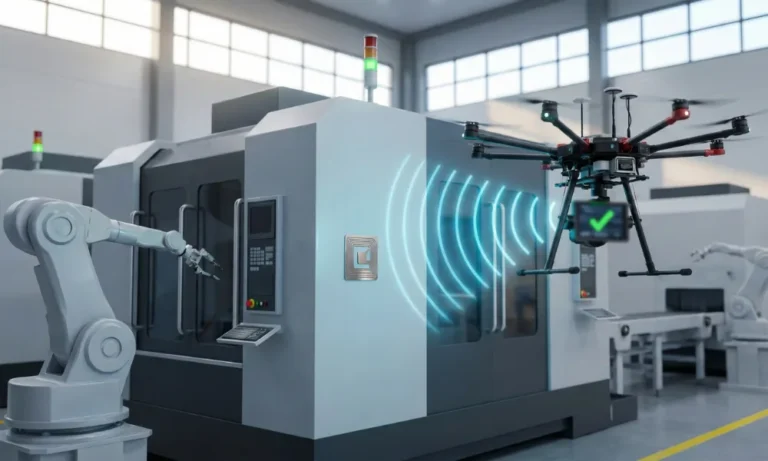
Autonomous drones are emerging as a game-changer for physical asset verification, conducting inventory counts and inspections in large or hard-to-reach areas quickly and safely. Equipped with cameras and RFID scanners, drones can fly through warehouses, stockrooms, or outdoor yards to locate and identify assets without manual labor. This technology addresses one of the biggest pain points in asset management: the time and risk involved in physically verifying every item. Instead of sending staff with clipboards or handheld scanners on forklifts, a fleet of drones can perform the same task autonomously during off-hours.
Leading implementations have shown impressive results. In a recent pilot, drones with RFID readers scanned up to 1,000 tagged assets per second with 99.9% accuracy. These AI-driven drones map their own route through the facility and can even recharge themselves as needed. The outcome is not just a faster count, but a smarter one: drones create a digital twin of the warehouse, pinpointing each asset’s exact location. This means missing or misplaced items are instantly identified. According to Maersk’s logistics team, using RFID drones led to “improved inventory accuracy, more streamlined operations, and better resource allocation,” allowing staff to focus on strategic tasks rather than manual counts.
Benefits of using drones for asset verification include:
-
Speed and efficiency:
Drones can audit a large warehouse or campus in a fraction of the time a human team would take. They can fly and scan continuously, drastically reducing audit duration from weeks to hours.
-
Reduced human risk:
For assets in hazardous or hard-to-reach areas (e.g. equipment on tall racks, remote sites, or under structures), drones collect data without putting employees in harm’s way.
-
Consistent accuracy:
Automation removes human errors like missed items or double counting. Each drone follows a programmed path and uses sensors consistently, ensuring a high accuracy rate on every count.
-
After-hours operation:
Drones can operate at night or during downtime without lighting or supervision, so audits don’t disrupt normal operations. The inventory data is ready by the next morning for review.
Industries like manufacturing, logistics, and retail are early adopters of drone audits. For instance, distribution centers deploy drones to verify thousands of pallet locations. Meanwhile, this enables daily reconciliation instead of yearly audits, improving asset visibility. Although drones need initial investment, long-term gains deliver significant audit efficiency improvements.
How does IoT enable real-time asset tracking and verification?
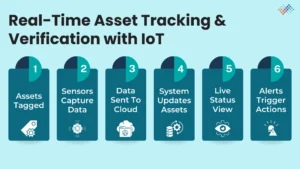
IoT (Internet of Things) sensors and smart tags allow organizations to monitor assets continuously, moving asset verification from a periodic event to an ongoing process. IoT sensors and smart tags enable continuous asset tracking by attaching internet-connected devices such as RFID tags, Bluetooth beacons, or GPS trackers to physical assets. These devices automatically transmit real-time location and status data to a centralized system, creating a live asset register that updates continuously. As a result, asset verification shifts from periodic audits to an always-on process, allowing organizations to quickly detect missing assets, unexpected movements, or compliance issues and take corrective action immediately.
This always-on visibility significantly improves audit readiness through continuous asset reporting. For example, IoT-enabled assets enable dashboard checks for offline or missing signals. Meanwhile, BLE tags and GPS-equipped machinery continuously log presence, location, and usage. Therefore, auditors trust system data and focus only on investigating critical anomalies.
The growth of IoT in asset management is explosive across enterprises. Consequently, enterprises value real-time data as the market expands rapidly. However, combining IoT with AI analytics unlocks the highest return. In other words, IoT provides the raw data (continuous asset readings) and AI turns that data into actionable insights (e.g. highlighting which assets haven’t reported in, predicting when an asset might fail or stray).
Key IoT-driven trends in asset verification:
-
Continuous verification (living audits):
Instead of a once-a-year audit, IoT enables a continuous verification approach. Your system is always auditing – checking asset presence and condition 24/7. Exceptions (like an asset going offline or moving unexpectedly) trigger alerts for investigation. This proactive model catches issues immediately, preventing year-end surprises.
-
Geo-fencing and alerts:
Assets can be geo-fenced with IoT, meaning if an asset leaves a designated area (say a piece of equipment is taken out of a plant without authorization), the system will flag it. This ensures asset movement aligns with approvals, aiding compliance and security.
-
Environmental and usage monitoring:
Beyond location, IoT sensors can track environmental conditions (temperature, humidity, vibration) and usage metrics. For sensitive assets, this means verification isn’t just about “is it there,” but “is it in proper condition.” Auditors get a richer picture of asset status, enhancing the verification process with quality and performance data.
-
Integration with maintenance systems:
IoT data often feeds into maintenance and ERP systems. A verified asset is not just present but also maintained. For instance, if an IoT vibration sensor predicts a machine’s failure, maintenance can fix it preemptively. From an audit perspective, this shows strong internal controls and prudent management of assets.
Implementing IoT for asset verification requires planning, tagging assets, and connectivity infrastructure. However, companies leverage enterprise IoT and AI asset management platforms like AssetCues for out-of-the-box integration. As a result, real-time asset intelligence simplifies audits and optimizes operational performance. Ultimately, continuous tracking reduces losses, improves utilization, and ensures asset register accuracy.
How can companies prepare for an automated asset audit future?
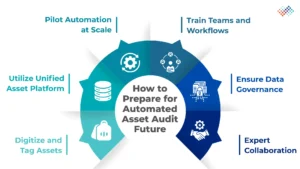
To embrace the future of automated asset audits, organizations should start laying the groundwork now by investing in the right tools, skills, and processes. Here’s how to prepare for these emerging trends and ensure a smooth transition:
-
Digitize and tag your assets:
Begin by ensuring all fixed assets are uniquely identified – whether via barcodes, QR codes, RFID tags, or IoT sensors. Digital tagging is a prerequisite for AI or drones to recognize and track assets. If you haven’t already, conduct a baseline physical verification to clean up your asset register and attach tags to each item. This creates a strong foundation for automation and aligns with verification of fixed assets in auditing to verify your starting inventory, reconcile discrepancies, and maintain audit-ready records.
-
Adopt an integrated asset management system:
Spreadsheets won’t suffice for next-generation asset verification and enterprise audit demands. Ideally, choose enterprise asset management software supporting mobile capture, AI, and IoT. For example, AssetCues combines mobile scanning, AI recognition, and real-time tracking. As a result, integrated systems create one source of truth for audits.
-
Pilot new technologies on a small scale:
It’s wise to pilot AI or drone solutions on limited assets first. For example, deploy RFID tags and one drone in a warehouse. Similarly, test AI-based reconciliation tools on recent audit data to identify discrepancies. Therefore, starting small builds expertise and refines processes without overwhelming organizations.
-
Train your team and adjust workflows:
Even with automation, humans remain central to asset verification processes. Therefore, upskill audit and IT teams to work effectively with technologies. For example, auditors shift from manual counts to AI-generated exception reports. Moreover, strong change management ensures teams embrace accuracy gains, not job fears.
-
Establish data governance and security:
As reliance on IoT and AI grows, enforce robust data governance policies. Meanwhile, protect vast sensor data through cybersecurity, privacy, and ethical use. Similarly, audit AI models for bias, errors, and ongoing performance. Therefore, require human sign-off thresholds to maintain audit compliance and oversight.
-
Engage vendors and experts:
Partner with technology providers who understand asset management within your industry. Additionally, experienced drone and IoT vendors guide effective deployment and system integration. Moreover, involve auditors and compliance experts early to validate automated processes. Choosing the right asset verification company helps ensure accurate, audit-ready records that confirm asset existence, eliminate ghost assets, reconcile discrepancies, and support regulatory compliance.
By taking these steps, companies position themselves to reap the full benefits of AI, drones, and IoT in asset verification. The end goal is a state where asset audits are no longer a frantic annual project, but a seamless, tech-assisted routine. Imagine having confidence that at any moment your asset register is 99.9% accurate, and any exceptions have already been spotted and resolved. That level of assurance is becoming reality with these innovations.
Key Takeaways
- Overall, asset verification is shifting from periodic manual audits to continuous, automated assurance, as AI, IoT, and drones provide faster verification, higher accuracy, and real-time visibility.
- By combining AI-driven reconciliation, drone-based physical scans, and IoT-powered monitoring, organizations drastically reduce audit effort, eliminate ghost assets, and detect discrepancies early.
- Finally, companies that digitize assets, adopt integrated platforms, and upskill teams today will stay audit-ready tomorrow, turning asset verification into a proactive, always-on control rather than a year-end exercise.
Conclusion
In conclusion, the evolution of asset verification reflects a broader shift toward intelligent, technology-led asset management. Rather than relying on reactive, time-bound audits, organizations can now maintain stronger oversight through automation and real-time data. By aligning verification practices with emerging technologies, enterprises not only improve audit outcomes but also strengthen governance, operational resilience, and decision-making across the asset lifecycle.
AI, drones, and IoT are reshaping asset verification into a faster, smarter, and continuous process. By embracing automation and real-time tracking, organizations can improve accuracy, reduce audit effort, and stay future-ready.

Frequently Asked Questions (FAQs)
Q1. What is the future of fixed asset verification?
Ans: The future of fixed asset verification lies in automation and real-time tracking. Companies will increasingly use AI-driven software, drones, and IoT sensors to continuously verify physical assets. This means fewer manual inventory counts and more always-up-to-date asset records. In short, asset audits will become faster, more accurate, and integrated into daily operations rather than annual events.
Q2. How is AI used in asset management and verification?
Ans: AI in asset management is used to identify assets, check records, and detect anomalies automatically. For example, AI-powered image recognition can read asset tags from a photo and update the asset register. Machine learning algorithms also reconcile scanned asset data with the database, flagging any missing or duplicate entries. By automating these tasks, AI in asset management reduces errors and saves auditors significant time.
Q3. How are drones used in asset audits?
Ans: Drones perform physical asset audits by autonomously scanning assets across large areas. Equipped with cameras or RFID scanners, drones quickly locate items, read tags. Meanwhile, drones cover hard-to-reach locations fast, delivering complete inventories without manual effort. Therefore, synced data highlights discrepancies instantly, making audits faster, safer, highly accurate.
Q4. Can asset verification be fully automated?
Ans: Asset verification can be highly automated, yet human oversight remains essential. Meanwhile, AI, drones, and IoT handle counting, tracking, and record reconciliation. In many cases, over 95% of auditing tasks can be automated. However, humans manage exceptions, judgments, and system reliability for trusted results.


