



What Is a Right-of-Use Asset?
A right-of-use asset represents the economic benefit a lessee gains from using a leased asset. It appears on the balance sheet for the lease term. When an organization enters a lease, it records a right-of-use asset if it meets recognition criteria. Teams measure it at the present value of future lease payments. They also include initial costs, prepayments, and restoration obligations.
At the same time, they record a lease liability of equal value. Teams then amortize the right-of-use asset over the shorter of the lease term or useful life. They also assess it for impairment when indicators arise.
TL;DR
A right-of-use (ROU) asset represents a lessee’s right to use an asset during the lease term. Under IFRS 16 and Ind AS 116, most leases require balance sheet recognition. As a result, teams record both a right-of-use asset and a lease liability. This marks a shift from earlier treatment. Previously, operating leases did not require asset or liability recognition.
Why Right-of-Use Assets Matter
IFRS 16 and Ind AS 116 changed how organizations report leases in financial statements. They came into effect in 2019. Before these standards, operating leases stayed off the balance sheet. Teams expensed rent but did not record assets or liabilities. Under the new model, organizations now record both assets and liabilities. As a result, companies with large lease portfolios show higher totals on the balance sheet.
This impacts retail chains, airlines, logistics firms, banks, and large office users. Finance directors, CFOs, and auditors must identify and measure all qualifying leases correctly. They must also track these leases throughout their term. Teams should include right-of-use assets in the fixed asset register. This ensures a complete and accurate view of the asset base.
How a Right-of-Use Asset Is Recognised and Measured
- At lease commencement, the lessee recognises a right-of-use asset and a corresponding lease liability.
- The ROU asset is initially measured at cost: the present value of the lease liability plus lease payments made at or before commencement, plus initial direct costs, plus estimated costs of dismantling or restoring the asset.
- After initial recognition, the ROU asset is amortised on a straight-line basis (or another systematic basis if more representative) over the shorter of the lease term or the asset’s useful life.
- Impairment is assessed under IAS 36 / Ind AS 36 when indicators of impairment exist.
- Lease modifications changes to scope, term, or payment — require reassessment of both the lease liability and the ROU asset.
Best Practices for Right-of-Use Assets
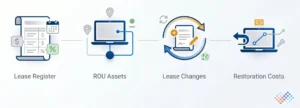
- Maintain a complete lease register. Teams must capture every qualifying lease with start date, term, payments, interest rate, and changes.
- Include ROU assets in the fixed asset register. Do not limit them to the lease accounting system. Teams should track custody, location, condition, and return obligations.
- Review lease terms when changes occur. Extensions, early exits, or scope changes require remeasurement of the asset and liability.
- Track return obligations and restoration costs. Include these estimates in the initial measurement and review them regularly.
How AssetCues Helps with Right-of-Use Assets
AssetCues allows organisations to include leased and right-of-use assets in the same register as owned assets, with custom fields to capture lease-specific data such as commencement date, term, lessor, and return conditions. This ensures that leased assets receive the same custody, location, and lifecycle controls as owned equipment.