




IT Inventory and Tracking Solution
Take Control of IT Assets
Across Every User and Location
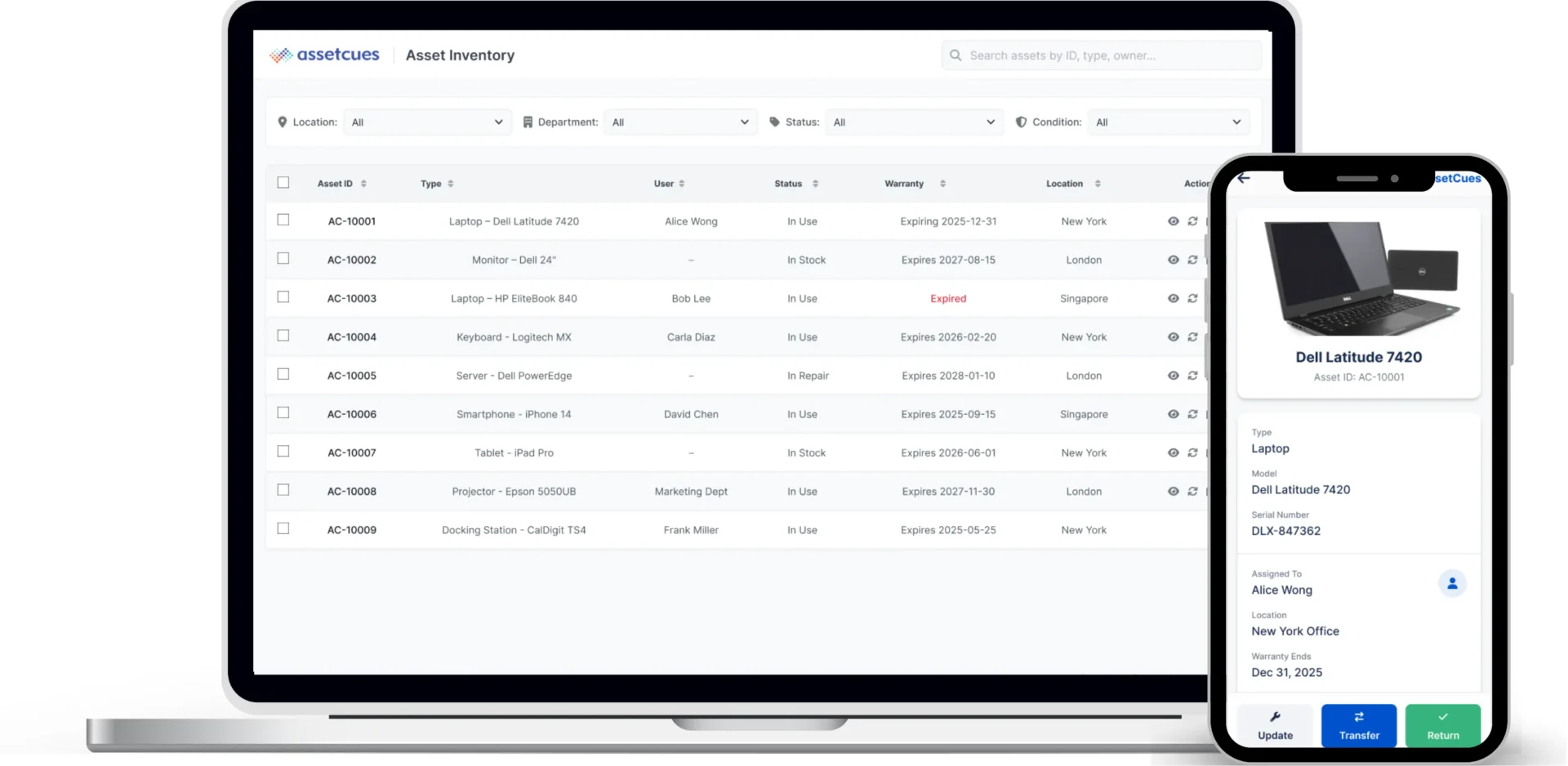
Replace spreadsheets with automated tracking, real-time status updates, and full ownership history for stronger governance.
Workflow
Take Full Control of Your IT Assets with Real-Time Tracking and Audit-Ready Reports
Stage 1:
Build a centralized inventory
Create a unified, real-time inventory database that captures every IT asset across all locations.
Stage 2:
Update via mobile scanning
Use fast mobile barcode scanning to instantly update asset records without manual entry.
Stage 3:
Monitor usage, status, and location
Track each asset’s owner, condition, and location to maintain complete operational visibility.
Stage 4:
Match physical vs digital in minutes
Quickly reconcile physical asset counts with system records for accurate, up-to-date inventories.
Stage 5:
Flag discrepancies automatically
Automatically detect missing, moved, or unrecorded assets to eliminate tracking errors and blind spots.
Stage 6:
Maintain audit-ready accuracy
Ensure continuously reconciled, traceable data so you are always prepared for any audit.
Challenges
The Hidden Risks of Managing Fixed Assets Manually
Manual asset tracking leads to visibility gaps, inaccurate records, and costly mistakes across purchase, transfer, and disposal cycles.
01
Outdated spreadsheets that lag behind reality
Manual spreadsheets fail to update in real time, causing asset mismatches, ghost entries, missing devices, and unreliable data across departments and locations.
- Slow updates
- Data inconsistencies
02
Long, error-prone audit cycles
Inefficient documentation and scattered records stretch audit timelines, making reconciliation difficult and increasing the risk of mistakes, compliance gaps, and failed validations.
- Frequent errors
- Slow reconciliation
03
Duplicate hardware purchases
Lack of real-time visibility into available assets causes unnecessary hardware purchases, inflated budgets, and poor utilization of existing IT resources.
- Unneeded buys
- Wasted budgets
04
Poor accountability
Unclear ownership of devices leads to misplaced assets, delayed returns, and difficulty tracking responsibility during employee onboarding, transfers, and exits.
- Weak tracking
- No ownership
05
High manual workload for IT teams
IT staff lose significant time updating records, chasing devices, and performing repetitive tasks that could be automated to increase efficiency and productivity.
- Repetitive tasks
- Low efficiency
Core Features
Centralized Asset Repository
Unified platform for storing and managing all assets.
Barcode & QR Based Tracking
Enables quick, precise identification through barcode scanning.
Real-Time Status Update
Provides instant visibility into asset movement and condition.


Continuous FAR Alignment
Ensures asset records always stay compliant with FAR reporting standards.

Audit-Ready
Registers
Maintains compliant, easily accessible records for audit reviews.
User-Wise
Allocation History
Tracks asset assignments and transfers for every user.
Allocation & usage history
Tracks complete lifecycle details of asset assignments and usage patterns.

Additional Features


Benefits
Gain complete, real-time viisibility of every IT asset across locations. Eliminate hidden devices, ghost assets, and data gaps to strengthen accuracy, compliance, and confident decision-making.
Automated tracking, reconciled registers, and detailed histories make audits smooth and stress-free. Auditors get instant, verifiable proof of ownership, movement, and compliance without manual effort.
Identify underutilized or idle assets and redeploy them efficiently. Prevent unnecessary purchases, reduce wastage, and ensure IT budgets are used effectively for higher ROI.
Match physical and digital records in minutes with automated checks. Quickly detect variances, correct errors early, and maintain always-accurate inventory without manual comparison.
Track usage, condition, and allocation history to make smarter refresh, repair, and replacement decisions. Extend asset life, reduce downtime, and plan investments more strategically.