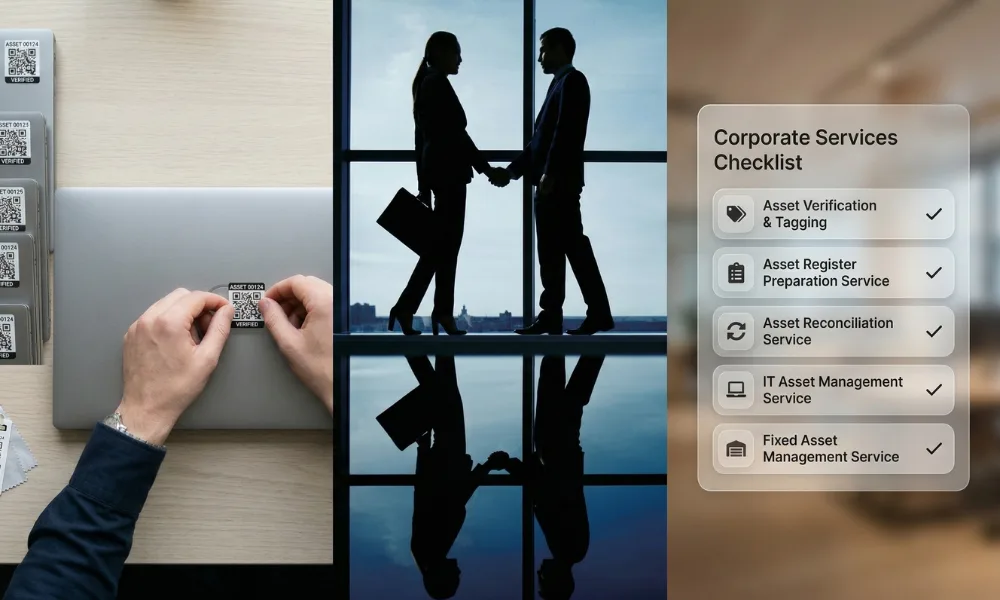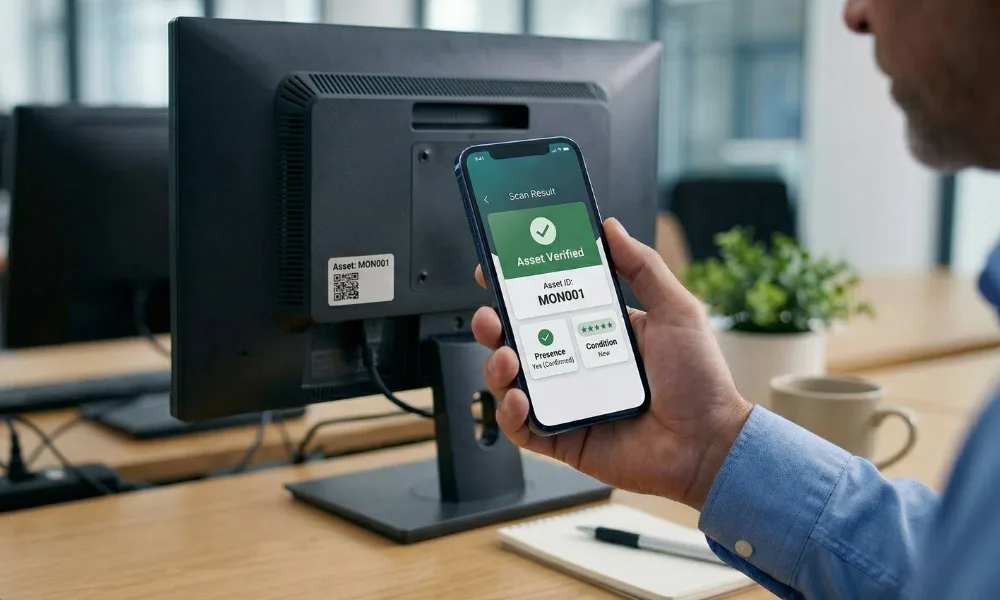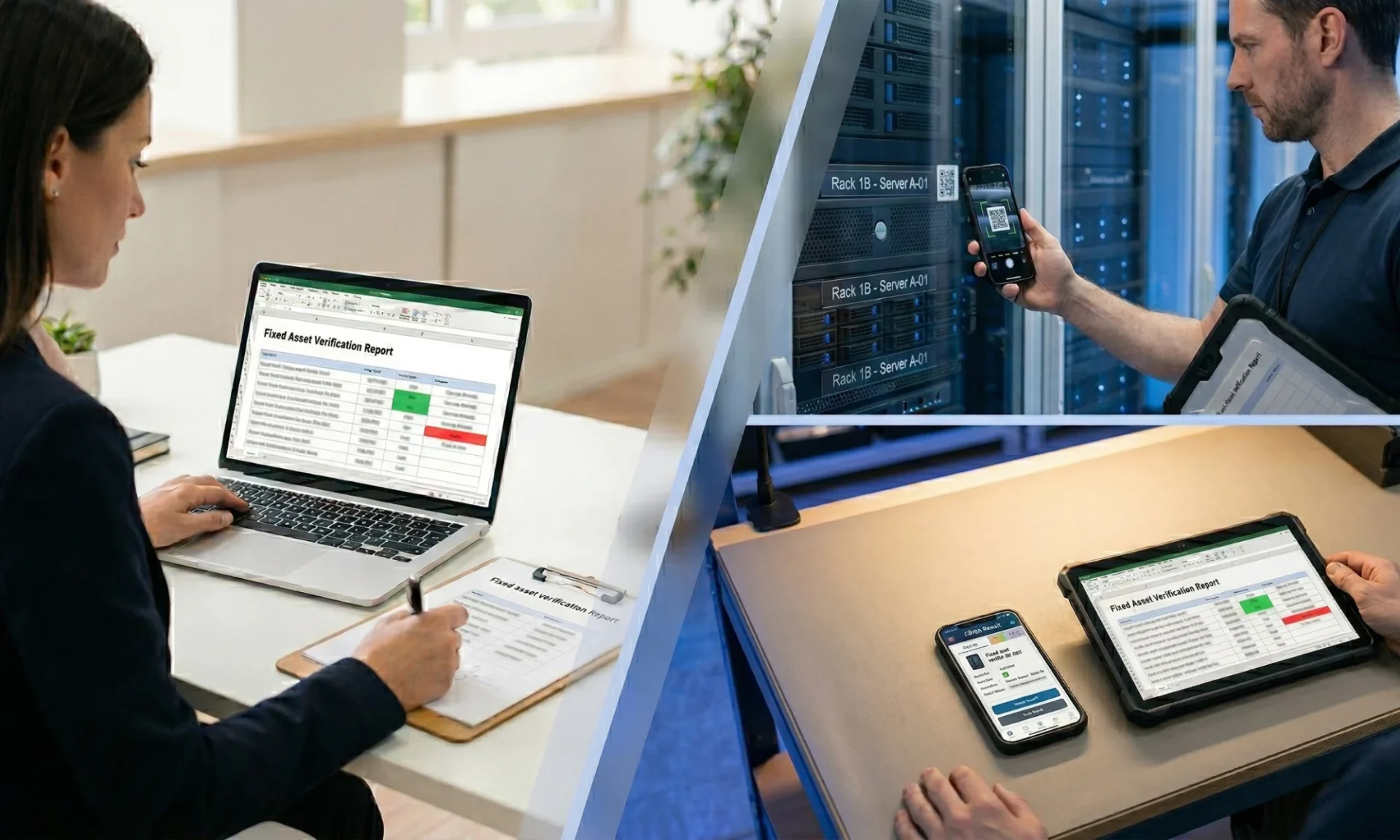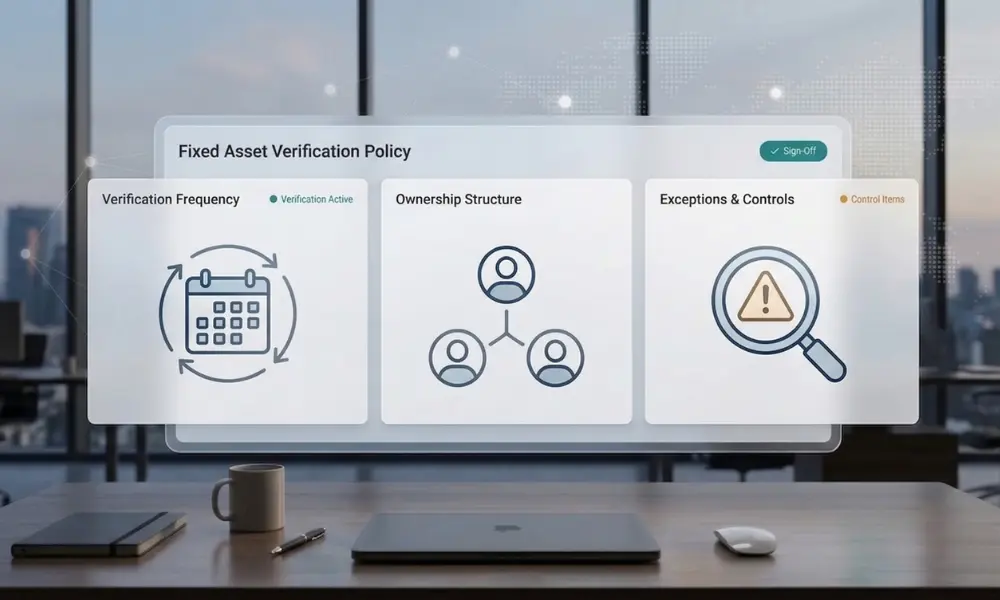



Introduction
Struggling to choose the right verification technology without overbuying hardware or duplicating live content you already publish? This guide shows how to design an asset verification and tracking system around the job the technology must do, not just around tag types or vendor claims. It is written for finance, audit, IT, and operations teams that need a system that is practical, scalable, and audit-usable.
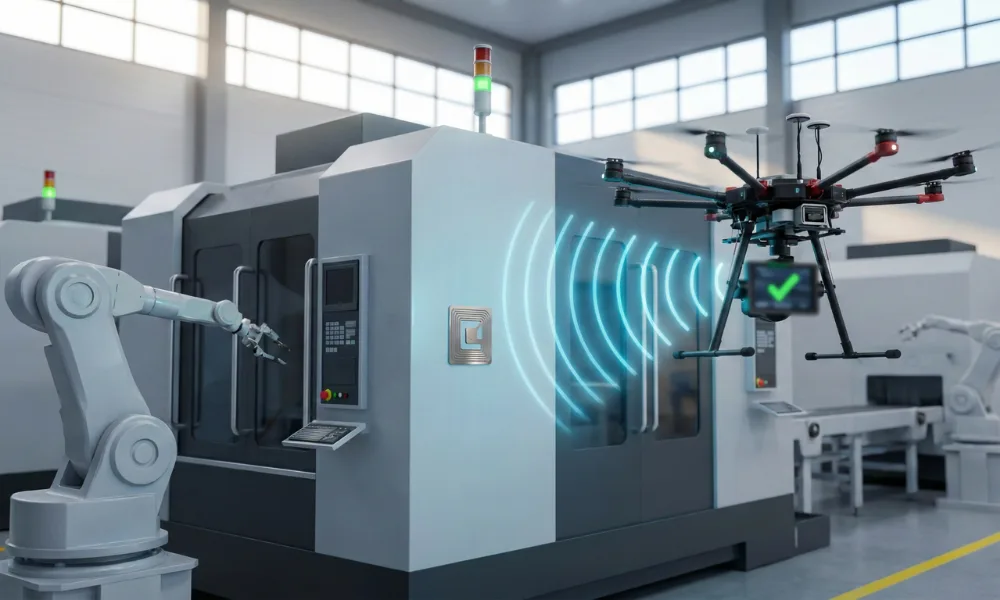
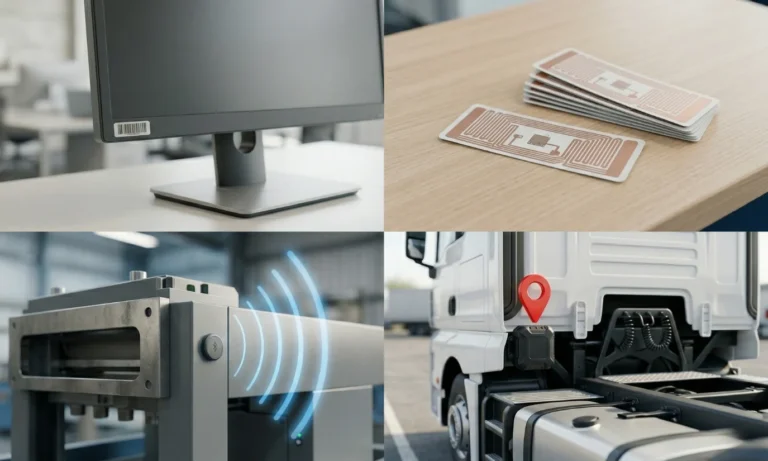
There is no single winner across asset tracking technologies. Barcodes work well for low-cost, controlled audit checks, while RFID supports bulk and non-line-of-sight verification. BLE is better suited for indoor proximity and location tracking within facilities, whereas GPS works best for outdoor or in-transit assets, though it loses accuracy indoors or underground. Choosing the right technology also depends on how structured your fixed asset verification process and physical audit cycle is — a well-defined cycle makes it far easier to match the right tool to each verification stage.
In this guide, you’ll learn:
- What you are really choosing between identity, location, or proof, and why this distinction changes how verification systems should be designed.
- How barcode, RFID, BLE, and GPS perform in different verification scenarios, so you can match the technology to the actual control requirement.
- Why most enterprises benefit from a hybrid design, especially when assets behave differently across locations, environments, and use cases.
- How to design a practical verification system step by step, including how to align asset classes, proof standards, and system integration.
- Finally, what common mistakes weaken verification systems, and how to avoid costly decisions that do not improve control or audit readiness.
What are you actually choosing: identity, location, or proof?
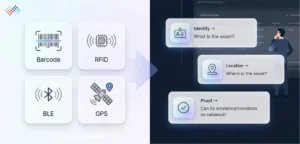
This is the most important clarification in the whole article. Barcode, RFID, BLE, and GPS do not do the same job. GS1’s RFID guidance frames barcode and RFID as alternative data carriers for identification, Bluetooth SIG frames BLE location services around presence, distance, and direction in indoor environments, and GPS.gov defines GPS as a positioning, navigation, and timing service. That means the technologies should be chosen by control question, not by hype.
Original contribution: The Identify–Locate–Prove–Sync stack
This page’s unique framework is simple:
Layer |
Main question |
Typical technologies |
Why it matters |
|---|---|---|---|
| Identify | Which asset is this? | Barcode, QR, RFID | Confirms identity against the register |
| Locate | Where is the asset now? | BLE, GPS, RFID portals, sometimes fixed readers | Adds location context and search speed |
| Prove | What evidence supports the result? | Photo, timestamp, geotag, condition, custodian, verifier | Turns scanning into audit-usable proof |
| Sync | How do approved results update the system of record? | Verification software + ERP/CMMS/ITAM integration | Closes the loop and keeps records clean |
The point is that BLE or GPS do not replace the need for a reliable identity layer, and barcode or RFID alone do not automatically solve indoor or outdoor live location. AssetCues’ automated asset verification software mirrors the same logic operationally: import the register, assign work, capture evidence, resolve discrepancies, and sync approved results back into core systems.
Which technology wins for which verification job?
The matrix below is a synthesis of GS1’s barcode/RFID guidance, Bluetooth SIG’s location services and direction-finding guidance, and GPS.gov’s official accuracy notes.
Verification job |
Best-fit technology |
Why does it usually win |
Main tradeoff |
|---|---|---|---|
| Low-cost periodic audit of fixed assets | Barcode / QR | Simple, cheap, easy to deploy | Requires line-of-sight and deliberate scans |
| Fast room, cabinet, cage, or warehouse counts | RFID | No line-of-sight and many tags can be read quickly | Higher infrastructure/design cost |
| Indoor search for mobile assets across wards, floors, bays, or zones | BLE RTLS | Built for indoor positioning and RTLS use cases | Needs locators/gateways and battery planning |
| Outdoor or in-transit tracking of vehicles and field equipment | GPS | Works across large geographies and outdoor routes | Weak indoors/underground; needs powered trackers/connectivity |
| Mixed enterprise environment | Hybrid | Each asset class gets the right layer | Needs stronger architecture and governance |
When your main question is “Can we prove this asset exists during audit?”, start with barcode or RFID. For location within a building, however, BLE becomes the stronger choice. Shift to GPS instead when tracking assets across cities, roads, or field sites. Finally, if all three questions demand answers simultaneously, avoid forcing one technology to handle every job — build a layered design instead.
⊕ When does barcode win?
Barcode wins when you need a low-friction identity layer for scheduled audits, custodian handovers, spot checks, and room-by-room verification. GS1’s own RAIN RFID guidance makes the contrast clear: barcodes need line of sight, while RFID removes that requirement. The same GS1 guidance also notes that barcodes remain cheaper and are often used as a backup system even when RFID is deployed. AssetCues’ live barcode guide already explains the detailed implementation workflow, which is why this page uses barcode mainly as a design baseline, not as an implementation tutorial.
-
Barcode is usually best for:
- Fixed desks, furniture, and room-based assets.
- Laptops and IT assets during deliberate audit cycles.
- Low-cost, high-volume deployments.
- Organizations that want minimal hardware complexity.
-
Barcode is usually weakest for:
- Sealed boxes, cages, or shelves where line-of-sight is hard.
- Very large bulk counts.
- Passive, automated doorway capture.
- Continuous live location.
A useful design rule follows from GS1’s guidance: even when you add other technologies later, a barcode or QR fallback often remains valuable because it gives teams a cheap, human-readable, audit-friendly identity backup.

⊕ When does RFID win?
RFID wins when speed, non-line-of-sight reads, and bulk detection matter more than the lowest possible tag cost. GS1 says RAIN RFID eliminates the need for line of sight, can read items not in direct view, and can inventory many items much faster than barcode. GS1 also notes that its RFID standards work is centered on HF and UHF passive tags, with UHF passive tags—RAIN RFID—being the most broadly implemented in its industries. AssetCues’ live RFID guide mirrors that position by focusing on tags, readers, and software as a complete RFID system rather than a label-only solution.
-
RFID is usually best for:
- Doorway or gate-based verification.
- High-volume warehouse or storeroom counts.
- Medical equipment or tools that move within controlled sites.
- High-value mobile equipment where scan labor is expensive.
-
RFID is usually weakest for:
- Organizations that only need a simple annual audit.
- Projects with no reader budget or no appetite for pilot testing.
- Environments where teams ignore tag placement, metal/liquid behavior, or interference testing.
That last point matters. AssetCues’ asset-tagging guide says RFID gives major speed advantages, but it also acknowledges that RFID costs more than barcodes and can face signal-interference challenges, which is one reason many organizations keep a hybrid model rather than going all-RFID.
⊕ When does BLE win?
BLE wins when the real question is indoor proximity or location rather than simple identity. Bluetooth SIG’s location-services documentation says Bluetooth is widely used to address demand for high-accuracy indoor location services, and it highlights RTLS asset-tracking use cases such as warehouses and hospitals. Bluetooth SIG’s direction-finding documentation goes further: Bluetooth Direction Finding can enable positioning systems that achieve centimeter-level location accuracy, with AoA and AoD methods designed for locating people and things within buildings.
-
BLE is usually best for:
- Indoor RTLS and room/zone visibility.
- Campuses, hospitals, factories, and large facilities.
- Shared equipment that wastes staff time when misplaced.
- Environments where search time matters more than manual scan labor.
-
BLE is usually weakest for:
- Organizations expect it to replace outdoor fleet/location tracking.
- Buyers who want high-accuracy indoor location without locators, gateways, or careful design.
- Small fixed-asset environments where periodic barcode scans already solve the problem.
A practical nuance matters here. Not every BLE rollout equals centimeter-level RTLS. Bluetooth SIG’s own Asset Tracking Profile and Direction Finding materials show that more advanced designs rely on locator infrastructure, antenna arrays, and AoA/AoD methods. So if a vendor promises “BLE indoor GPS,” ask whether they mean simple proximity beacons or a full direction-finding architecture.
⊕ When does GPS win?
GPS wins when the asset lives outdoors, moves between sites, or needs route, yard, or field visibility. GPS.gov defines GPS as a positioning, navigation, and timing utility, and its accuracy guidance explicitly lists satellite blockage, indoor or underground use, and multipath from buildings or walls as common causes of degraded accuracy. AssetCues’ own live geo-tagging guide aligns with that: it says GPS works best outdoors with a clear satellite view and often needs to be combined with RFID or BLE to bridge indoor gaps.
-
GPS is usually best for:
- Vehicles, trailers, containers, and field equipment.
- Utilities, construction, telecom, and service fleets.
- Theft recovery, route visibility, and wide-area movement.
- Assets that spend meaningful time outdoors.
-
GPS is usually weakest for:
- Room-level indoor search.
- Underground or dense indoor environments.
- Low-cost tagging of desks, chairs, and static office assets.
- Any verification design that needs an identity layer without a powered tracker.
So, if the asset does not move outdoors or across large geographies, GPS is often the wrong first choice for verification design. Use it where outdoor visibility creates real control value.
Why most enterprises need a hybrid design
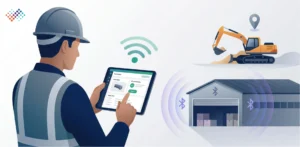
A hybrid design is often the most practical answer because fixed assets do not all behave the same way. AssetCues’ geo-tagging page explicitly says many organizations combine GPS with RFID or BLE to cover indoor and outdoor environments, and its verification software page says the platform supports multiple technologies while syncing verified outcomes back to ERP. That is exactly how a mature design should work: pick the cheapest sufficient identity layer, then add location technology only where it solves a real visibility gap.
Sample hybrid blueprints
Environment |
Likely design |
Why it works |
|---|---|---|
| Corporate offices / IT estates | Barcode as default identity + BLE for shared mobile assets | Keeps baseline cost low while improving indoor findability |
| Hospitals/campuses | Barcode fallback ID + BLE RTLS for movable devices + RFID in storerooms | Supports indoor search and faster controlled-area counts |
| Warehouses/factories | RFID for portals or bulk zones + barcode fallback + BLE for forklifts/carts | Separates count speed from live indoor movement |
| Field services/utilities/construction | Barcode or RFID in depots + GPS for vehicles/major outdoor equipment | Aligns outdoor mobility with powered tracking only where needed |
These are design examples, not hard rules. The point is to match the tech stack to the control problem, the environment, and the cost of not knowing where an asset is.
How do you design the right system?
-
Start with the control question
Decide whether the system’s job is to prove existence during audit, accelerate inventories, find movable assets indoors, track assets outdoors, or do a mix of those. If you do not start here, you will compare technologies at the wrong level.
-
Segment assets by behavior, not just by department
Group assets by mobility, environment, value, and proof requirement. A server rack, laptop pool, forklift, utility vehicle, and classroom projector do not deserve the same design. Your earlier cluster content already leans this way by separating fixed-location, mobile, embedded, and exception-controlled assets.
-
Choose the identity layer first
Most designs should start with a barcode or RFID because verification still needs a dependable identity match against the asset register. GPS and BLE help locate a tag or tracker, but they do not remove the need for a unique asset ID tied back to the books.
-
Add a location layer only where it creates real control value
Use BLE if indoor search time, RTLS, or room/zone visibility matters. Use GPS if the asset is genuinely outdoors, in transit, or field-based. Skip both when periodic barcode or RFID verification already answers the business question.
-
Design the proof standard, not just the tag
A scan alone is rarely enough. A robust verification approach should clearly define which assets require supporting evidence such as photos, condition details, precise location, custodian, timestamps, or geotags. It should also treat proof capture and discrepancy handling as integral parts of the process, not as afterthoughts.
-
Plan infrastructure, exceptions, and fallback paths
BLE may need locators or gateways. RFID may need a portal or a handheld reader strategy. GPS may need powered devices and connectivity. Barcode may need a printer, scanner, and label-governance rules. Also, decide what happens when tags are damaged, signals are weak, or assets are embedded or non-taggable.
-
Sync only approved results back to the system of record
A strong design closes the loop into ERP, CMMS, CMDB, or the fixed asset register after review and approval. AssetCues’ software page is very explicit about this: verified and reconciled data flows back to SAP, Oracle, or Dynamics, and the platform maintains audit logs that capture time, user, and location.
What mistakes make verification systems fail?
- Treating all four technologies as substitutes.
They are not. Barcode and RFID mainly identify. BLE and GPS mainly locate. - Using GPS for indoor proof.
GPS.gov explicitly lists indoor or underground use and building blockage as common problems. - Buying BLE without RTLS design discipline.
Bluetooth SIG’s own materials show that advanced indoor accuracy depends on proper locator and direction-finding design, not just beacons. - Choosing RFID without checking whether line-of-sight and scan labor are actually your bottlenecks.
RFID is powerful, but GS1 is clear that it is not automatically the right answer for every use case. - Ignoring fallback identity.
Even in RFID-heavy or BLE/GPS-enabled environments, barcodes often remain a practical backup identity layer. - Forgetting the sync layer.
A verification system that never updates the register or ERP creates more dashboards, not better control.
Country-specific design notes
→ USA: design for auditable controls, not just live maps
US organizations should select technology that enables management review and produces defensible internal-control evidence, not just operational visibility. SEC rules require management’s internal-control reporting to address responsibility and effectiveness. Therefore, for many fixed-asset environments, barcode or RFID plus stronger proof capture may create more control value than jumping straight to real-time location technologies. Use BLE or GPS where they reduce material search, loss, or custody risk—not just because they sound more advanced.
→ India: design around plant reality and “reasonable intervals.”
India-focused design often starts with plants, branches, and dispersed operations, rather than aiming for real-time location tracking across all assets. CARO guidance focuses on management verification at reasonable intervals and on whether material discrepancies were properly dealt with in the books. That usually makes barcode or RFID the identity foundation, with BLE or GPS added selectively where location uncertainty is a recurring problem.
→ United Kingdom: design for material controls review across estates
UK readers, especially those managing campuses, estates, or distributed office portfolios, should choose technology that supports annual review of material controls under Provision 29. That usually means stronger thinking about portable assets, unresolved exception visibility, and whether indoor location layers like BLE add enough control value to justify infrastructure.
→ South Africa: make location and condition outputs part of the design brief
South African public entities and municipal requirements often expect more than simple counts. Recent official documents call for asset verification outputs that include location, condition, useful life, missing/damaged schedules, trial-balance alignment, and sometimes GIS or photo evidence. That makes South Africa a strong fit for designs that separate identity, location, and proof very clearly—and that can export structured reports, not just raw scan logs.
Key takeaways
- Most enterprises ask the wrong question. The real question is not “barcode or RFID?” but “what control job are we solving?”
- Barcode and RFID are primarily identity layers. BLE and GPS are primarily location layers. A good verification system often needs both.
- BLE is not “indoor GPS” by default. High-accuracy BLE positioning depends on proper RTLS or direction-finding design, not just sticking beacons on assets.
- GPS is not a good default for indoor fixed assets. GPS.gov explicitly lists indoor or underground use and signal blockage from buildings as common accuracy problems.
- The best system design usually starts with the fixed asset register, defines the working set of assets, selects the right tag stack by asset class, and syncs approved results back into ERP, CMMS, or ITAM systems.
Conclusion
The best asset verification system design does not start with a vendor brochure. It starts with a control question. Barcodes help prove identity cheaply. RFID speeds up non-line-of-sight bulk verification. BLE strengthens indoor visibility. GPS strengthens outdoor location. Most enterprises need a layered design that combines the cheapest sufficient identity method with the right indoor or outdoor location layer and closes the loop through software, proof, and ERP sync.
This also connects naturally to the next step in evaluation—understanding how different capabilities fit together. Some solutions focus on multi-technology support, mobile proof capture, audit trails, and ERP reconciliation, while others go deeper into real-time location tracking and geo-tagging. Before committing to any specific tag, reader, gateway, or rollout model, it’s important to first choose the right overall system architecture
FAQs
Q1: Do I need GPS for fixed assets?
Ans: Usually not for static indoor fixed assets. GPS makes more sense for field equipment, vehicles, and outdoor/mobile assets where wide-area location matters.
Q2: Can RFID replace barcodes completely?
Ans: Not always. GS1 explicitly says RAIN RFID is an alternative, not an automatic replacement, and notes that barcodes often remain a cheaper or backup option.
Q3: What is the best setup for audit-driven fixed asset verification?
Ans: For many organizations, the best starting point is barcode or RFID for identity plus strong proof capture in software—photos, condition, timestamps, discrepancies, and ERP sync. Then add BLE or GPS only where indoor or outdoor location gaps create real control problems.
Q4: Which technology usually gives the best ROI?
Ans: Barcodes usually have the lowest entry cost. RFID often wins when scan labor is the main cost problem. BLE often wins when indoor search time is expensive. GPS often wins when outdoor loss, utilization, or recovery matters. The right answer depends on where your current cost and control failure actually sit.
Q5: What should we pilot first?
Ans: Pilot the asset class where uncertainty is expensive but still measurable—for example, shared medical devices, forklifts, server-room spares, or field equipment. A good pilot proves the workflow, the proof standard, and the integration path, not just the tag read rate.