




Introduction
Asset tagging has become a critical component for organizations seeking to enhance asset visibility, streamline physical verification, and ultimately improve operational efficiency. In addition, this guide provides a step-by-step asset tagging implementation approach and builds on the foundational concepts covered in our detailed fixed asset tagging guide. Moreover, it is designed for fixed asset managers, finance managers, IT managers, facilities managers, and business leaders looking to deploy a robust asset tagging solution. By following a structured process, organizations can reduce asset loss, enhance compliance, and improve overall ROI.
In this guide, you’ll learn:
- First, what an asset tagging system is and how it improves visibility, verification, and control.
- Next, which asset tracking technologies barcode, RFID, GPS, or BLE to use based on asset type and use case.
- Then, how to implement an asset tagging system step by step, from planning through to ERP integration.
- Finally, best practices for post-implementation audits, optimization, and future readiness.
What Is an Asset Tagging System?
An asset tagging system is a structured method of identifying and tracking physical assets by assigning each item a unique tag, enabling real-time visibility, accurate audits, and lifecycle control.
In practice, it helps organizations to:
- Identify assets uniquely using barcodes, RFID, QR codes, or digital IDs.
- Track location, condition, and usage across the asset lifecycle.
- Reduce manual errors and asset loss through automated data capture.
- Integrate with asset registers or ERP systems for compliance and reporting.
Overview of Asset Tracking Technologies
-
Barcode/QR Code Tagging
- Barcodes encode basic data and are scanned using a handheld device, making them ideal for static assets.
- In contrast, QR Codes store more information and can link to digital records, enhancing traceability and integration with other systems.
-
RFID Asset Tagging
- Uses radio waves to read tags without direct line of sight.
- Passive RFID tags are cost-effective and activated by a reader, while active RFID tags include a battery for longer range and automated, rapid data capture.
-
GPS Tracking
- Provides real-time location data via satellite signals, making it perfect for monitoring mobile or outdoor assets like vehicles.
- Typically more expensive and power-intensive, this approach is highly effective for GPS-based asset geo tagging where precise location visibility and continuous tracking are critical.
-
BLE Tracking
- Bluetooth Low Energy (BLE) offers a low-power, short-range solution suitable for indoor or localized tracking.
- Cost-effective and easily integrated with smartphones, though with less range and precision compared to RFID or GPS.
Features of a Good Asset Tagging System
A robust asset tagging system not only captures asset data accurately but also integrates seamlessly with existing business operations. Here are the critical features that distinguish a superior asset tagging system:
-
Mobile Application Capability
A leading system includes a dedicated mobile app for on-the-go tagging, scanning, and data capture. With features like high-resolution image capture, geolocation, and instant data synchronization, the app ensures field personnel can tag assets efficiently and accurately.
-
Asset Componenting & Grouping
The system should allow for granular tagging by supporting the tagging of individual components as well as grouping related, non-taggable items under a parent asset. This flexibility helps create a detailed asset hierarchy, facilitating better management and tracking of complex asset assemblies.
Prebuilt ERP Connectors
Integration is key. A good asset tagging solution offers out-of-the-box connectors to popular ERP systems such as SAP, Oracle, or Microsoft Dynamics. As a result, asset data flows seamlessly between the tagging system and your enterprise software, reducing manual entry errors and speeding up decision-making.
-
Configurable Review Workflows
To maintain data integrity, the system should include a configurable workflow that allows asset managers to review, verify, and approve tagged asset data. This built-in quality control helps catch inconsistencies early and ensures the asset register remains accurate.
-
Offline Functionality
For environments with unreliable connectivity—such as remote locations or large industrial facilities—the ability to tag assets offline is crucial. In this situations, the system should cache data locally and sync automatically once connectivity is restored, so operations continuous without disruption.
-
Scheduled Audits & Maintenance
A comprehensive asset tagging system supports periodic physical audits. Additionally, it should enable scheduling of audits, provide prompt reminders for inspections, and allow for the updating or replacement of tags. By doing so, modern asset tagging solutions help ensure asset data remains current, accurate, and reliable over time.
-
Analytics & Reporting
Insightful analytics are essential for proactive asset management. Specifically, the system should offer customizable dashboards and reporting features that highlight key metrics such as asset aging, missing or at-risk assets, and audit performance. By providing these insights, analytics empower managers to make data-driven decisions and optimize asset utilization.
-
Broad Technology Integration
The ideal system integrates seamlessly with various tracking technologies (barcodes, QR codes, RFID, GPS, BLE) and supports a wide range of hardware vendors. As a result, this versatility allows organizations to tailor the asset tagging solution to different asset types and operational environments, ensuring that the system grows seamlessly with your business.

How Do You Implement An Asset Tagging System Step-By-Step?
Implementing an asset tagging system requires careful planning and execution. Below is a detailed, research-backed guide to ensure a smooth deployment:
-
Identify Tracking Objectives
- Define specific goals such as automating physical verification, tracking asset movement, or meeting regulatory compliance.
- Determine which assets require tagging and decide whether a single technology or a hybrid approach is needed based on asset type and operational environment.
-
Conduct a Thorough Physical Audit
- Perform a complete physical inventory of assets to validate your current baseline.
- Classify assets by value, location, usage, and environmental conditions. This step helps in selecting the appropriate tag type (e.g., durable metal tags for heavy equipment, non-metal asset tag for laptops).
-
Reconcile the Baseline with the Asset Register
- Compare your physical audit results with the existing asset register.
- Update the register to reflect any discrepancies and establish a clean baseline for the tagging process.
-
Evaluate and Select an Asset Management Software
- Research multiple asset management products and ensure that at least a few options meet your criteria. While free asset tagging tools may appear suitable for small inventories or pilot projects, they often lack scalability, automation, and ERP integrations—making them less reliable for long-term compliance and audit readiness.
- At this stage, evaluate key features, integration capabilities, and scalability. In particular, consider solutions that offer comprehensive tagging features—AssetCues is one such leader with compelling capabilities.
-
Implement the Tagging System
- System Setup: Install the chosen software and configure it to align with your asset management processes.
- Integration: Connect the system with your ERP or asset register to ensure seamless data flow.
- Tag Production: Determine the material, printing, and affixing technology that matches the asset’s lifecycle. This decision affects durability and readability.
-
Perform Asset Tagging
- Deploy tags using best practices: affix tags in optimal, visible locations using secure fixing methods.
- Utilize the mobile application to capture asset photos, record geolocation data, and enter additional physical information during the tagging process.
-
Review and Validate Tagged Assets
- Conduct a rigorous review to verify that each tag is accurately recorded in the asset register.
- Additionally, resolve any discrepancies immediately to prevent long-term data inaccuracies.
-
Integrate with ERP Systems
- Finalize the process by integrating asset tag numbers into your ERP.
- Ensure that the asset management system updates in real time with any changes made during tagging or audits.

-
Training and Change Management
- Provide comprehensive training to all users—ensuring that they are proficient with the new system, especially the mobile app and review workflows.
- Communicate changes across departments to secure adoption and mitigate resistance.
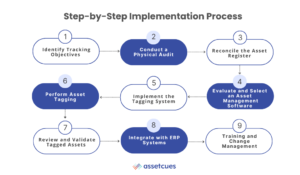
This structured implementation process creates a clear roadmap from initial planning through post-deployment integration, which ensures your asset tagging system delivers maximum operational efficiency and long-term ROI.
Post-Implementation Strategies
-
Ongoing Asset Tagging & Periodic Audits
-
Regular Audits:
- Schedule periodic reviews to ensure asset data remains accurate and current.
-
Tag Maintenance:
- Establish protocols for inspecting and replacing damaged or worn tags.
-
-
Performance Metrics
-
Monitor KPIs:
- Track key indicators such as reduced audit time, decreased asset loss incidents, and improved data accuracy.
-
Automated Reporting:
- Use reports to identify performance gaps and areas for further optimization.
-
-
Feedback & Continuous Improvement
-
User Feedback:
- Encourage staff to provide feedback on system usability and identify any challenges.
-
System Upgrades:
- Moreover, regularly update the asset tagging system based on technological advancements and user suggestions.
-
Future Trends in Asset Tagging Systems
-
IoT and Smart Tagging
-
Real-Time Analytics:
- Integration with IoT devices allows continuous monitoring and immediate decision-making.
-
Enhanced Data Capture:
- Smart tags can record environmental data, aiding in predictive maintenance.
-
-
AI and Predictive Analytics
-
Proactive Maintenance:
- AI-driven insights forecast maintenance needs, reducing downtime.
-
Optimized Asset Lifecycle:
- Additionally, predictive analytics help determine the optimal time for asset upgrades or replacements, maximizing ROI.
-
-
Blockchain for Data Security
-
Tamper-Proof Records:
- Blockchain integration offers immutable records of asset transactions, strengthening data security and regulatory compliance.
-
Transparent Audits:
- Enhanced audit transparency reduces the risk of fraud and data manipulation.
-
Post-Implementation Strategies

Key Takeaways
- Overall, an asset tagging system creates a single source of truth for physical assets, thereby improving visibility, audit accuracy, and lifecycle control across the organization.
- By selecting the right tagging technology and following a structured implementation process, organizations reduce asset loss, minimize manual errors, and strengthen compliance.
- Finally, through ongoing audits, system integrations, and emerging technologies like IoT and AI, businesses ensure long-term scalability and maximize ROI from asset tagging initiatives.
Conclusion
Implementing an asset tagging system is a strategic investment that can dramatically enhance asset visibility, operational efficiency, and overall financial performance. By following this comprehensive, step-by-step approach—from defining objectives and performing a detailed audit to integrating with your ERP and planning for continuous improvement—organizations can build a robust, scalable system.
As emerging trends like IoT, AI, and blockchain continue to evolve, they promise to further refine asset tracking, ensuring that your organization remains agile and ahead of the curve. For organizations managing laptops, servers, and other digital infrastructure, explore how IT asset tagging with device asset tags supports lifecycle control, compliance, and security. Re-examine your current asset management practices and consider a comprehensive asset tagging system that not only meets today’s needs but is also adaptable for future advancements.
In short, a well-implemented asset tagging system gives organizations complete visibility, stronger control, and audit-ready accuracy. With the right technology and processes in place, assets remain traceable, compliant, and optimized hence supporting efficient management and reliable reporting throughout their lifecycle.
FAQs
Q1. How long does it take to implement an asset tagging system?
Ans. Implementing an asset tagging system typically takes a few days to a few weeks, depending on asset volume, locations, and technology used. To speed things up, clean the asset register in advance, standardize data fields, and use barcode or RFID-based tagging tools.
Q2. What is asset tagging and tracking?
Ans. Asset tagging and tracking involves labeling physical assets with unique IDs such as barcodes or RFID and monitoring them through a tracking system. As a result, organizations gain real-time visibility into asset location, usage, and status, enabling effective audits and day-to-day asset management.
Q3. How do asset tagging systems integrate with ERP or accounting software?
Ans. Modern asset tagging systems like AssetCues integrate with ERP platforms to automatically sync asset data—such as location, status, and condition. As a result, this ensures accurate depreciation, real-time updates, and audit compliance across SAP, Oracle, and other ERP systems.
Q4. What industries benefit the most from asset tagging systems?
Ans. Industries with large volumes of physical assets benefit significantly from asset tagging systems. These include: Manufacturing, Healthcare, Education, IT & Technology, Government & Public Sector.
Q5. How does AssetCues help with asset tagging and tracking?
Ans. AssetCues offers a SaaS-based solution designed specifically for fixed asset tagging and physical verification, using RFID, barcode, or QR technologies to ensure accurate asset tracking and management.