



What Is IT Asset Disposition (ITAD)?
IT asset disposition (ITAD) is the structured process organizations use to retire hardware at the end of its life. It covers laptops, servers, desktops, storage devices, networking equipment, and peripherals. ITAD is not just discarding old equipment. It is a governed workflow that ensures teams sanitize data beyond recovery. It also ensures they meet environmental disposal requirements and update financial records. Teams maintain a documented chain of custody throughout the process. As a result, ITAD acts as both a security control and an audit requirement for large organizations.
TL;DR
IT asset disposition (ITAD) is the controlled process of retiring and disposing of IT hardware. It addresses data security, environmental obligations, chain of custody, and financial record updates. Therefore, it is a critical end-of-life discipline in hardware asset management. If teams manage it poorly, they create regulatory exposure and data breach risk. They also leave unresolved entries in the asset register.
Why IT Asset Disposition Matters
Improper IT asset disposition exposes organizations to serious risk. A retired laptop without proper sanitization can expose sensitive data. This includes customer records, employee data, and proprietary information. In addition, regulations such as GDPR, DPDP in India, and e-waste laws impose strict disposal requirements. Organizations must handle and document equipment disposal correctly.
Enterprises with distributed assets or third-party vendors face higher complexity. Without a formal ITAD process, retired hardware may remain untracked. As a result, ghost assets appear in the register and weaken audit integrity.
How IT Asset Disposition Works
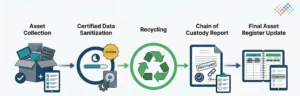
A well-structured ITAD process typically follows these stages:
- Identify and collect assets: Teams log devices tagged for retirement, physically collect them, and match them against the asset register.
- Perform data sanitization: Teams wipe all storage media using certified methods—overwriting, degaussing, or physical destruction based on data sensitivity and device type.
- Handle remarketing or recycling: Next, teams refurbish and resell devices with residual value, while they send end-of-life devices to certified e-waste vendors for responsible recycling.
- Document chain of custody: Then, teams generate a certificate of data destruction and a disposal record for each device, creating a complete audit trail from collection to final disposition.
- Update the asset register: Finally, teams formally write off or dispose of retired assets in the fixed asset register, closing the asset lifecycle.
Best Practices for IT Asset Disposition
- Never retire a data-bearing device without a certified data sanitization step. A documented wipe or destruction certificate is the minimum evidence required for audit and regulatory defense.
- Maintain a formal ITAD policy that defines retirement triggers, approved vendors, sanitization standards, and documentation requirements. Ad hoc disposal decisions create compliance gaps.
- Update the asset register at the point of retirement, not after the fact. Delays create ghost asset entries that distort physical-to-register reconciliation during audits.
- Use a managed chain of custody from device collection through final disposition. Every handover point — from employee to IT, IT to warehouse, warehouse to ITAD vendor should be logged.
How AssetCues Helps with IT Asset Disposition
AssetCues tracks the full IT asset lifecycle from procurement to retirement. This gives organizations complete visibility over ITAD workflows. When teams flag an asset for retirement, AssetCues records the disposition status. It links handover documents and updates the asset register automatically.