



Introduction
No accounting standard will tell you whether a $1,800 printer belongs on your balance sheet. FASB is silent, IAS 16 says materiality, and the IRS offers a safe harbor rather than a rule. The fixed asset capitalization threshold, or asset capitalization threshold, is therefore a policy decision rather than a prescribed accounting requirement.
The threshold for asset capitalization is yours to set, and it decides more day-to-day treatment than any other number in your fixed asset policy. This guide covers what the IRS, GAAP practice, GASB, and grant rules actually say, what the rest of the world does, and how to pick a number you can defend.
A fixed asset capitalization threshold is the minimum cost at which an expenditure is recorded as an asset rather than expensed immediately. It is a materiality policy set by each organization, commonly $2,500 to $5,000 in US practice, not a number prescribed by any accounting standard.
In this guide
- What a fixed asset capitalization threshold is, how materiality determines it, and how GAAP, IFRS, IRS, and public-sector guidance influence threshold decisions.
- How to establish a defensible capitalization threshold by evaluating materiality, tax rules, aggregation, sub-threshold controls, and organizational reporting requirements.
- Why poorly chosen thresholds create compliance, reporting, audit, and asset control issues, and how consistent policies reduce those risks.
- How to document, implement, and apply capitalization thresholds consistently through written policies, accounting procedures, and standardized invoice coding workflows.
What is a capitalization threshold?
A capitalization threshold is the line below which you stop pretending small purchases are investments. A $900 chair technically delivers benefit for years, but capitalizing it, depreciating it, and tracking it costs more than the precision is worth.
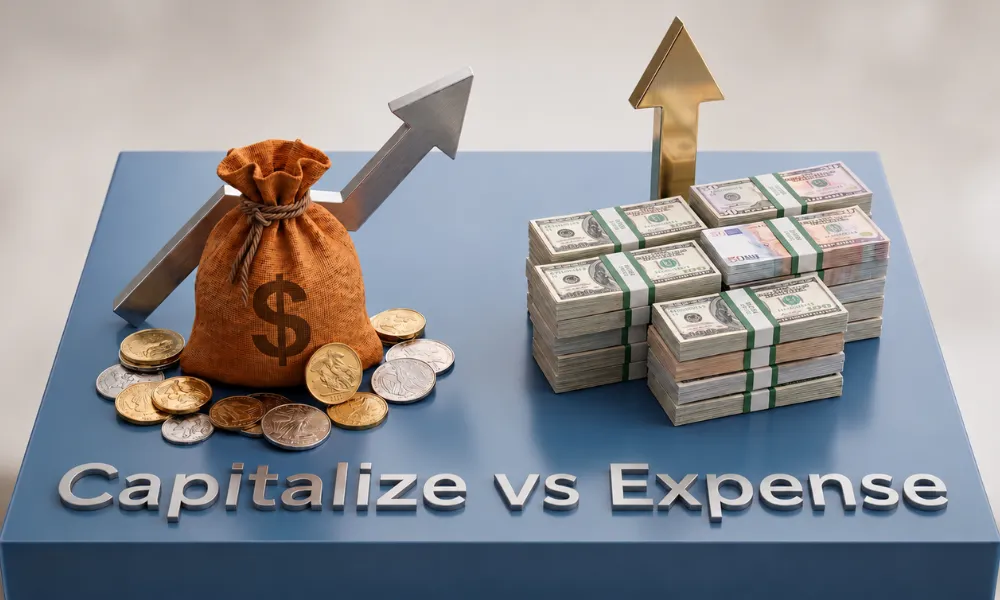
The threshold converts that trade-off into a bright line for CapEx vs OpEx decisions: at or above, capitalize; below, expense, even when the item lasts a decade. It is a materiality simplification, and every framework blesses it; none quantifies it.
The IRS de minimis safe harbor
The closest thing to an official US number is the de minimis safe harbor under Reg. 1.263(a)-1(f): expense items costing up to $5,000 per item or invoice if you have an applicable financial statement, or $2,500 if you do not, and the IRS will not challenge the treatment.
An applicable financial statement (AFS) means an SEC filing, a certified audited financial statement with an independent auditor’s report, or a statement required by a federal or state agency. Most enterprises have one; most small businesses do not; hence the two tiers.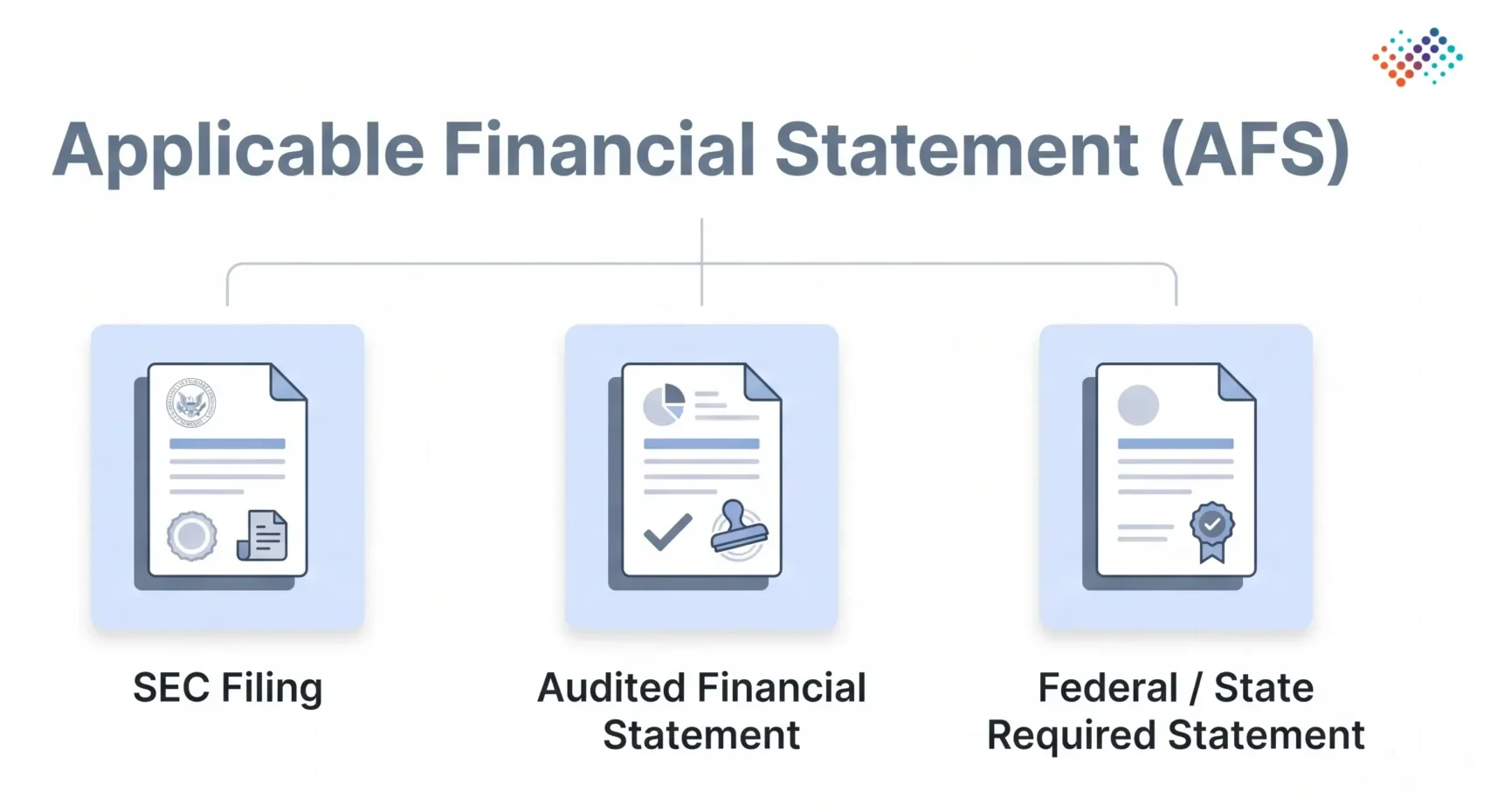
The mechanics are strict and commonly fumbled. The election is annual, a statement titled ‘Section 1.263(a)-1(f) de minimis safe harbor election’ attached to a timely filed return. AFS taxpayers must also have a written asset capitalization policy and accounting procedures in place before the year starts, expensing items below the amount; the policy precedes the election, not the reverse.
Three more edges worth knowing: the threshold applies per invoice or per item, as substantiated, so itemized invoices matter; land, inventory are excluded; and your book threshold and the elected amount should match, since the safe harbor covers amounts expensed in your books.
GAAP: the number nobody prescribes
Searches for ‘FASB capitalization rules’ expect a codified dollar amount. There is none: US GAAP requires capitalizing PP&E and leaves the minimum to materiality the same position IAS 16 and Ind AS 16 take.
Practice fills the vacuum. Most US companies set $2,500 or $5,000, aligning book policy with the de minimis tier they qualify for, because running different book and tax thresholds doubles the reconciliation work for no benefit. Larger enterprises sometimes go higher with auditor concurrence, since the threshold is ultimately a materiality judgement your auditor must accept.
Government and grants: GASB, GFOA, and Uniform Guidance
The public sector, unusually, has published numbers. GASB itself prescribes no threshold, but GFOA’s best-practice guidance recommends capitalizing only items costing at least $5,000 and warns against thresholds so low that tracking costs exceed the control benefit.
Federal grants add a defined term with a trap in it. The 2024 Uniform Guidance revision defines equipment as property costing at or above the lesser of your own capitalization level or $10,000, for awards from October 1, 2024.
Read that twice: lesser of. A university that keeps its internal threshold at $5,000 must apply $5,000 to federal awards; the $10,000 relief only arrives if the internal policy rises to meet it. Grant-funded entities weighing a threshold increase have, right now, an unusually concrete reason to act.
Tax mechanisms around the world (that are not thresholds)
Outside the US, tax law offers expensing mechanisms that get mistaken for capitalization thresholds. They are not; they are tax deductions layered on top of whatever your book policy says:
| Market | The tax mechanism | What it is not |
|---|---|---|
| Australia | Instant asset write-off for small businesses: the cap is set year to year (A$20,000 in recent years) | Not a book threshold: AASB 116 still requires a materiality-based capitalization policy |
| United Kingdom | Annual Investment Allowance (£1m) and full expensing 100% first-year capital allowances | Allowances apply to capitalized assets; they do not decide what you capitalize |
| Canada | Capital Cost Allowance classes and rates | No per-item tax threshold at all book policy stands alone |
| South Africa | SARS permits full write-off of small items costing R7,000 or less | A tax deduction rule; IFRS book policy is still materiality-based |
| India | No de minimis income tax depreciates by block of assets; the old ₹5,000 full-depreciation rule did not carry into Schedule II | Ind AS entities set a materiality threshold and disclose it; Schedule II governs lives, not thresholds |
One book threshold in your policy, applied globally; local tax mechanisms claimed on the tax side, entity by entity. Mixing them, capitalizing on a tax number in one country and a book number in another makes group reporting incoherent.
Threshold Too low vs too high: what each mistake costs
| Threshold too LOW | Threshold too HIGH |
|---|---|
| Register bloats with items not worth tracking thousands of lines of chairs and cables | Assets understated on the balance sheet; ratios built on the asset base distort |
| Depreciation admin and verification effort spent on trivia | P&L takes lumpy first-year hits as mid-value equipment expenses immediately |
| Physical verification becomes impossible at scale and gets skipped | Untracked equipment: expensed items exist physically but appear in no control system |
| Every audit samples more lines for less assurance | Auditor challenge if the number outruns any materiality justification |
A too-low threshold wastes effort, but a too-high one creates a control hole; expensive equipment still walks out of buildings. Many organizations solve this by tracking items below the capitalization threshold: they skip the balance sheet but are still tagged in the asset management system.
Aggregation: when small items add up
The classic threshold issue is easy to recognize: a company buys 500 chairs at $300 each, creating a $150,000 purchase, yet no individual chair exceeds the capitalization threshold. If the company expenses every chair, the entire office fit-out disappears from the balance sheet.
A well-written policy addresses this with an aggregation clause. Instead of assessing individually insignificant items separately, the policy evaluates items purchased as a group for a single purpose in aggregate. IFRS practice explicitly capitalizes these groups, while US practice reaches the same outcome by treating them as a bulk purchase.
Therefore, organizations must define the clause before the invoice arrives, because adding it afterward can appear manipulative regardless of the direction.
Applying the threshold where decisions happen
A threshold fails quietly when it sits in a policy PDF while teams code transactions in an AP screen. Different people make the comparison hundreds of times each month against invoices that bundle assets with services, creating the exact conditions for inconsistent application of the written threshold.
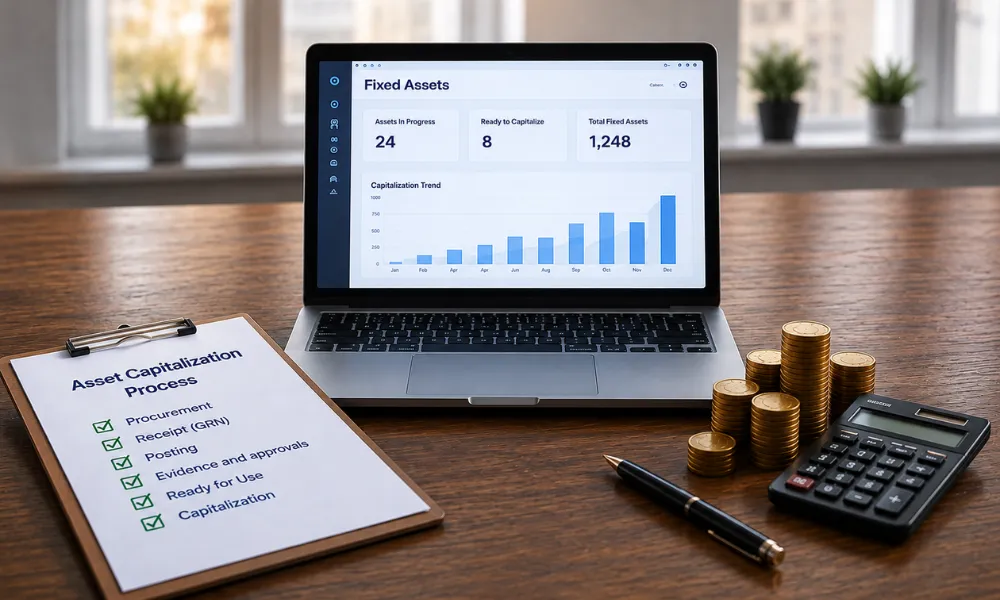
This is where the threshold becomes part of the capitalization workflow. AssetCues applies the threshold through its policy engine when teams create an asset candidate, alongside asset classification and componentization logic. As a result, the system evaluates the threshold once, applies it consistently, and enforces the aggregation rule instead of relying on individual judgment.
How to set your capitalization threshold: 6 steps
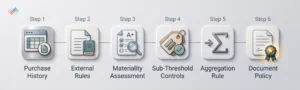
- Using purchase history: Profile a year of purchases by cost band. The worksheet above turns this into the P&L and register effect of each candidate number.
- Using external constraints: Anchor against the de minimis tier you qualify for, GFOA guidance if governmental, and the grant equipment definition if federally funded.
- Using a materiality assessment: Test materiality by confirming the expensed total under the candidate threshold stays immaterial to the statements, and pre-clear the number with your auditor.
- Using sub-threshold controls: Decide the control answer that ensures expensed items still get tagged and tracked, so the control hole never opens.
- Using an aggregation rule: Write the aggregation clause for bulk purchases before you need it.
- Using documented policies and procedures: Document the threshold and aggregation rule in the capitalization policy, the written procedures dated before year-start, and the annual election statement under Section 1.263(a)-1(f), attached to a timely filed return.
Key takeaway
- No standard prescribes a threshold; GAAP and IFRS rely on materiality, making it a documented policy decision.
- The IRS de minimis safe harbor allows $5,000 with an applicable financial statement and $2,500 without one.
- Government guidance uses defined thresholds: GFOA recommends at least $5,000, while federal grants use the lesser of $10,000.
- Foreign tax regimes provide expensing mechanisms, not book thresholds, and confusing the two creates accounting errors.
- Too low inflates the register and tracking effort; too high understates assets and leaves equipment untracked.
Conclusion
Choosing the right asset capitalization threshold is a materiality decision that balances accurate financial reporting with practical asset management. A clearly documented threshold for asset capitalization, applied consistently across the organization, reduces classification errors, strengthens compliance, and ensures capitalization decisions remain accurate, defensible, and audit-ready.
FAQs on capitalization thresholds
Q1. What is the IRS capitalization threshold?
Ans: The IRS does not mandate a capitalization threshold, but its de minimis safe harbor lets taxpayers expense items costing up to $5,000 per item or invoice with an applicable financial statement, or $2,500 without one, free from challenge. The safe harbor requires an annual election statement under Reg. 1.263(a)-1(f) and accounting procedures in place before the year begins.
Q2. Does GAAP require a specific capitalization threshold?
Ans: No. US GAAP requires property, plant, and equipment to be capitalized but prescribes no minimum dollar amount, leaving the threshold to each entity’s materiality judgement, the same position IFRS and Ind AS take. Searches for FASB threshold rules find nothing because nothing exists; the de minimis safe harbor is a tax provision, not a GAAP rule.
Q3. What capitalization threshold do most companies use?
Ans: Most US companies set $2,500 or $5,000, matching the de minimis safe harbor tier they qualify for, so book and tax treatment align. Larger enterprises sometimes justify higher amounts on materiality grounds with auditor concurrence, while governments cluster at the GFOA-recommended $5,000.
Q4. Can we change our capitalization threshold?
Ans: Yes: prospectively, with documentation. Update the policy and written accounting procedures before the new year starts, model the P&L effect, clear the change with your auditor, and align the annual de minimis election where applicable. Changing the number mid-year, or retroactively, is what poses a challenge.