

Introduction
Physical asset management is the discipline of controlling the real-world assets a business runs on: machinery, IT hardware, vehicles, tools, and furniture across identity, location, custody, condition, and lifecycle. This guide covers what it includes, how tracking and strategy fit, and the question buyers actually arrive with: which physical asset management software category do you need FAM, EAM, or CMMS?
That last question is the one nobody answers in one place. The category boundaries are scattered across maintenance-vendor glossaries and small-business pillars; the map below puts them side by side, with an honest selection framework. For organizations whose priority is keeping physical assets aligned with financial records and audit evidence, fixed asset management software is where that control sits.
In this guide, you will learn:
- What physical asset management covers, how it connects physical records with financial data, and which assets, controls, and lifecycle stages fall within its scope.
- How physical asset tracking and management use identifiers, workflows, evidence, and verification to maintain accurate records of location, custody, condition, and existence.
- Why FAM, EAM, and CMMS serve different operational needs, and how to choose between them based on business pain points and trusted records.
- How to evaluate software requirements, integration needs, and complementary systems to improve visibility into idle, duplicate, and deteriorating physical assets.
What Physical Asset Management Covers (vs Financial and Digital)
Three views of the same word cause most of the confusion. The financial view manages assets as balance-sheet values capitalization, depreciation, reporting; the accounting half of the fixed asset management discipline. The digital view manages software and data. Physical asset management is the third: the tangible things themselves – where they are, who holds them, what condition they are in, whether they still exist.
One disambiguation worth a sentence: searches for physical asset management companies often mean investment firms managing real assets, infrastructure, property, energy. This guide covers the operational discipline instead: controlling the equipment your own business runs on, and the software and services built for it.
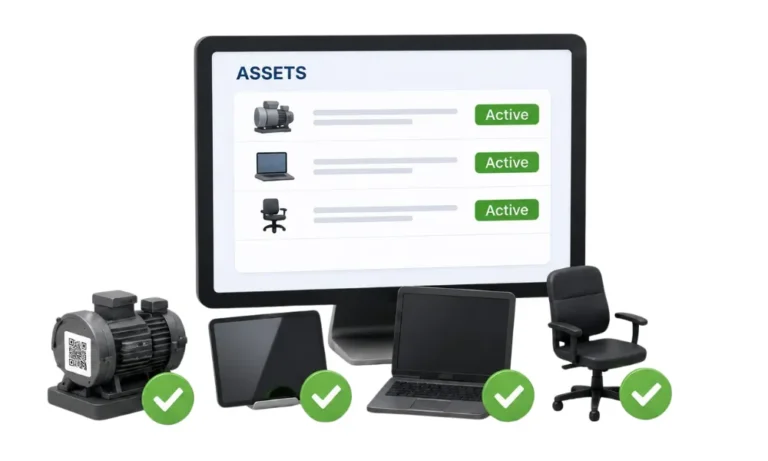
- In scope: Plant and machinery, IT hardware, vehicles, tools and instruments, furniture and fixtures, facilities, equipment anything tangible with an owner and a location.
- The core questions: What exists, where is it, who is accountable, what condition is it in, and can we prove all four?
- The connection: Physical truth feeds financial truth a register is only as accurate as the floor it describes.
What Is a Physical Asset Management System?
A physical asset management system is the combination of software, unique identifiers, workflows and evidence an organization uses to run the discipline not the software licence alone. Identifiers connect objects to records; workflows route approvals for moves, returns and retirements; evidence scans, photos, confirmations – makes the record provable rather than asserted.
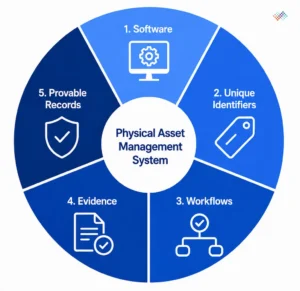
Judge any system by one test: when an asset moves, degrades or disappears, does the record change at the event with an approval trail or does someone reconstruct it later from memory and email?
Lifecycle Strategy for Physical Assets
Strategy is deciding, per lifecycle stage, who owns the truth and what event updates it. Acquisition sets identity and custody; the in-service years run on approved movement, maintenance capture, and scheduled verification; retirement closes identity, data, and record together. The strategy question is simpler: name an owner per stage before you name a tool.
Physical Asset Tracking and Management: The Operating Layer
Physical asset tracking and management is where discipline meets the floor. It uses unique tags and serials, scan-based moves and check-outs, assigned custody, and periodic verification. Physical asset tracking alone answers where and who; management adds approval, condition, and lifecycle. Together, these controls distinguish finding an asset from controlling it.
Tooling for this layer is its own purchase decision. Physical asset tracking software handles identifiers, mobile scanning, movement, and verification workflows – asset tracking software shows what that looks like in practice, and the complete guide to fixed asset tracking covers methods, process, and the metrics that prove tracking works.
Physical Asset Management Software: The Category Map (FAM vs EAM vs CMMS)
Three software categories all claim the physical asset, and buyers routinely purchase the wrong one. Each answers a different core question; the map below puts them side by side.
Criteria |
FAM (fixed asset management) |
EAM (enterprise asset management) |
CMMS (maintenance management) |
|---|---|---|---|
| Core question | Is the register true – existence, custody, value, evidence? | How do we maximize asset performance and lifecycle value? | How do we plan and execute maintenance work? |
| Anchor record | The asset register (tied to the ERP and general ledger) | The asset hierarchy (plants, systems, equipment) | The work order |
| Primary users | Finance, audit, asset controllers, operations custodians | Reliability, plant management, operations leadership | Maintenance teams and planners |
| Strongest at | Identity, custody, verification, reconciliation, audit evidence | Performance analytics, lifecycle cost, capital planning | Preventive schedules, work execution, parts and labor |
| Does NOT do well | Maintenance planning and execution | Register-to-ledger audit truth at line level | Financial-record accuracy; custody and audit evidence |
| Buy it when | Audits hurt; registers drift; custody is ambiguous | Asset-intensive operations need performance economics | Maintenance runs on spreadsheets and memory |
ITAM/CMDB tools govern IT assets specifically and often coexist with all three. Combinations are normal, not a failure. FAM plus CMMS is a common enterprise pairing: one keeps the record true, the other keeps the equipment running. The integration question matters more than category purity.
Which one do you need?
- Start from the pain, not the acronym: Audit findings, ghost assets, and custody disputes point to FAM; downtime and lifecycle cost point to EAM; reactive maintenance points to CMMS.
- Check the anchor record you trust least: Register, hierarchy or work order and buy the category that owns it.
- If two pains tie, buy the register first: Performance and maintenance decisions made on wrong asset data compound the error.
- Insist on integration answers before purchase: Which system is master for identity, location and status, and how do changes sync?
Idle Assets and Condition: The Visibility Payoff
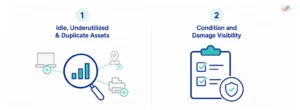
The practical payoff is visibility that no single data stream can provide. Status, location, and employee self-certification data together surface idle, underutilized, and duplicate assets. This can reveal equipment bought twice because nobody could see the first one. Additionally, capturing condition during audits, transfers, returns, and retirements, increasingly with AI assistance, can surface damage and impairment indicators early.
Where AssetCues Fits
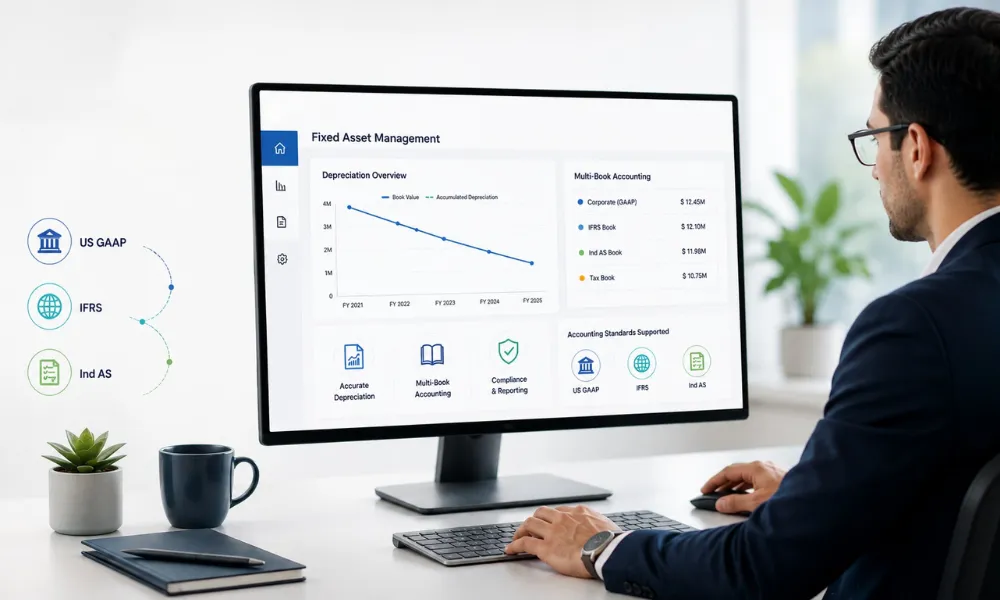
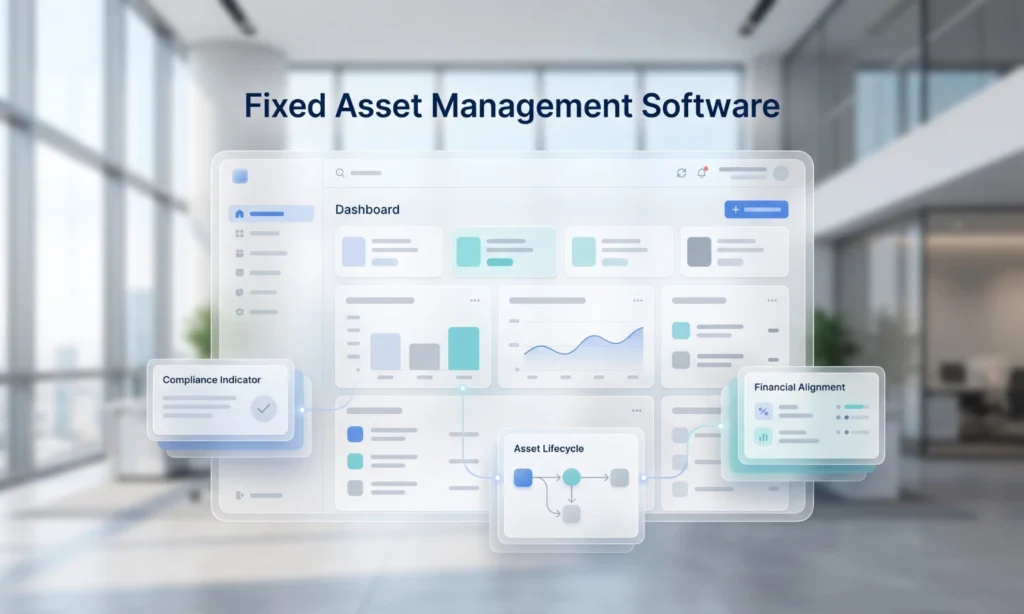
On this map, AssetCues is the FAM and physical-verification layer: identity, custody, movement, verification, reconciliation, and audit evidence, integrated with the ERP, the register side of the pairing, complementing rather than replacing EAM and CMMS tools. The fixed asset management software features a checklist and scoring framework that helps teams evaluate which capabilities actually reduce control risk before committing to a platform.
The fixed asset management software covers the platform for tagging programs, verification cycles, and register rebuilds delivered as a service.
Key Takeaways
- Physical asset management controls the tangible assets identity, location, custody, condition, existence and feeds the financial record.
- A system is software plus identifiers, workflows and evidence; judge it by whether records change at the event with approvals.
- FAM, EAM and CMMS answer different core questions; buy the category that owns the record you trust least.
- Combinations are normal FAM plus CMMS is a common enterprise pairing; integration mastery matters more than category purity.
- The payoff is visibility: idle, duplicate and degrading assets surfaced while they are still decisions.
Conclusion
Physical asset management stops being abstract the moment you ask the four questions of any asset in the building: what is it, where is it, whose is it, what state is it in and can you prove the answers? Software makes the proving scalable; the category map above tells you which software that is. Physical asset management software, a physical asset management system, and physical asset tracking software help maintain accurate identity, location, custody, and verification records.
Physical Asset Management FAQ
Q1. What is a physical asset management system?
Ans: A physical asset management system combines software, unique identifiers, approval workflows and evidence capture into one operating whole. Identifiers connect objects to records, workflows route moves and retirements through approval, and scans, photos and confirmations make the record provable. The software alone is a database; the system is what keeps it true.
Q2. What is the difference between FAM, EAM and CMMS?
Ans: They answer different core questions. FAM keeps the asset register true – existence, custody, value and audit evidence, anchored to the ledger. EAM maximizes asset performance and lifecycle value across an equipment hierarchy. CMMS plans and executes maintenance through work orders. Enterprises commonly pair FAM with CMMS rather than choosing one.
Q3. What are examples of physical assets?
Ans: Plant and production machinery, IT hardware such as laptops and servers, vehicles and mobile equipment, tools and instruments, and furniture. Facilities equipment like HVAC systems and generators also fall within this scope. The common thread is tangible items with an owner, location, and lifecycle. Each requires clear identity, custody, and periodic verification.
Q4. How do I choose physical asset management software?
Ans: Start from the pain: audit findings and register drift point to FAM; downtime economics point to EAM; reactive maintenance points to CMMS. Buy the category that owns the record you trust least, verify integration mastery for identity, location and status, and treat combinations as normal – most enterprises run more than one.