


Introduction
There is no single best fixed asset tracking tool; there is a best tool for your buyer type. A controller defending the register in an audit, an operations manager tracking equipment across plants, and an IT lead tracking laptops should each shortlist different products.
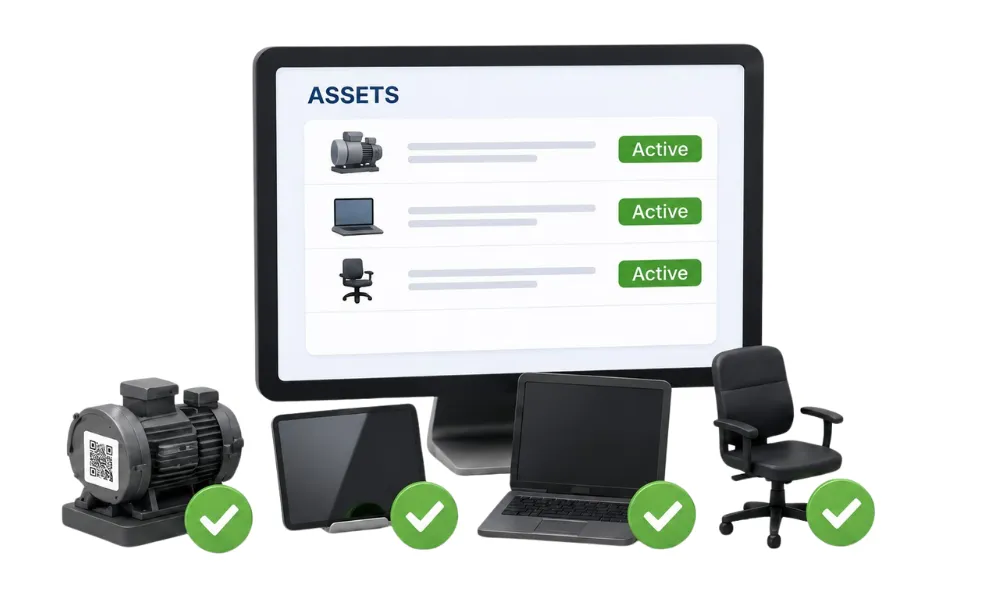
A good tracking tool tells you where every asset is, who holds it, and whether the physical asset still matches the record. If you also need capitalization and ERP posting in the same system, read what complete fixed asset management software covers before you compare vendors.
This guide compares the leading fixed asset tracking tools for 2026, segment by segment, using a published evaluation rubric. The goal is a three-to-six-vendor shortlist, not a generic top-10 list.
Disclosure: This comparison is written and published by AssetCues, which sells a fixed asset platform reviewed below. Our criteria are stated openly, and competitor notes come from each vendor’s current official materials.
In this guide, you will learn:
- How fixed asset tracking tools differ across enterprise finance, field operations, maintenance and IT environments.
- How to score vendors on verification, tag technology, location visibility, audit evidence and integrations.
- Which tool fits each buyer type, and where each one stops.
- How to validate a shortlist with a pilot on real assets and real exceptions.
How we evaluate (and how to score vendors yourself)
We score tracking software on whether it keeps physical assets and records aligned, not on review volume or feature-list length. A tool can be excellent at check-in/check-out and still be the wrong choice when tracking must stand up in an audit.
Our picks are editorial fit judgments, not lab scores. We reviewed each vendor’s publicly available product information and user reviews on G2 and Capterra, and judged which buyer type each tool fits best.
The weighted rubric below is the framework we used to make those judgments, and the one we recommend you use to score vendors during your own evaluation. Where a capability was not publicly confirmed, we say “validate in a demo” rather than “not available.
| Evaluation criterion | Weight | What to test during selection |
|---|---|---|
| Physical verification and mobile execution | 20% | Can field teams scan, verify, photograph, and flag exceptions quickly, including at sites with weak connectivity? |
| Tag technology and tag integrity | 18% | Does it support barcode, QR, and RFID? Is tag and serial uniqueness enforced against a controlled tag registry? |
| Location, custody and movement visibility | 14% | Can you see each asset’s site, custodian, and status, and every transfer with its approval? |
| Audit evidence and exception handling | 14% | Are missing, found, and ghost assets routed through investigation and approval, with evidence attached? |
| Integration depth | 12% | Does it sync with ERP, ITSM/CMDB, HRMS and procurement without manual rework? |
| Multi-site scale | 10% | Can it handle entities, locations, and asset classes across countries? |
| Services and implementation support | 6% | Can the vendor help with tagging, register cleanup, and reconciliation when the starting data is not clean? |
| Security and usability | 6% | Role-based access, SSO, audit logs, and an app site teams will actually use under time pressure. |
The best fixed asset tracking software in 2026
1. AssetCues: Best for enterprise tracking that must reconcile to the register
AssetCues is built for the point where physical assets, the fixed asset register, approvals, and audit evidence must stay aligned. It combines tracking, mobile AI-assisted asset verification software, approval workflows, and audit trails in one governed workflow.
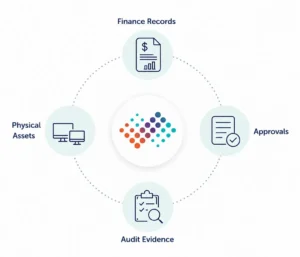
Tag and serial uniqueness is enforced across barcode, QR, and RFID against a controlled tag registry, so verification results reconcile cleanly. Ghost assets, items on the register that cannot be found, are identified during verification and routed through investigation, approval and ERP update instead of sitting in the books.
Prebuilt ERP connectors for SAP, Oracle and Microsoft Dynamics sync approved physical changes back to the ERP, so reconciliation does not pile up at year-end. For rollouts where legacy data is not clean, asset verification services cover tagging, register preparation and reconciliation.
Where it fits: Mid-size to large enterprises with recurring audits and multiple sites or entities. Teams that are also shortlisting the best fixed asset management software can cover tracking, verification and register control in one platform instead of two.
Where it does not: A small team that only needs check-in/check-out will find a lighter tool simpler. AssetCues is not a production-maintenance CMMS.
Demo question to ask us: “Show one asset moving from receipt to tagging, verification, transfer approval, ERP update, a ghost-asset exception and the audit evidence export.”
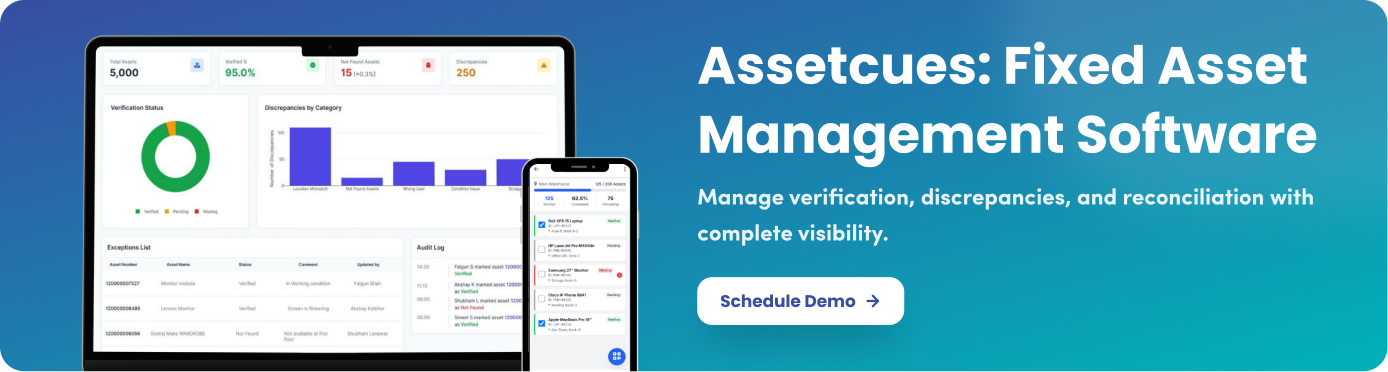
2. Asset Panda: Best for customization and mobile flexibility
Asset Panda is a configurable, mobile-first tracking platform. Teams tailor fields, categories and workflows, and the app handles barcode/QR scanning, photos and on-the-spot audits. A free trial is available.
Watchout: Validate fixed asset accounting depth, ERP sync and approval evidence before making it the primary record for finance.
(Source: G2)
3. EZOfficeInventory (EZO): Best for equipment-heavy teams and reporting
EZO covers availability, location, check-in/check-out, maintenance tickets and depreciation visibility in one system. It supports barcode, QR and optional RFID scanning through its mobile app, with a strong reports library.
Watchout: Test audit evidence, ERP synchronization and register governance in detail before enterprise finance use.
(Source: G2)
4. Wasp AssetCloud: Best for a one-vendor software and hardware setup
AssetCloud pairs cloud tracking software with Wasp’s own scanners, labels and RFID kits. That keeps deployment simple for schools, public-sector teams and smaller organizations, with check-in/out, audits, reporting and notifications covered.
Watchout: Enterprise finance workflows and large-ERP integration may need added controls; reporting is solid rather than analytics-deep. (Source: Capterra)
5. UpKeep: Best for maintenance-led teams (CMMS)
UpKeep is a mobile-first CMMS with an asset register attached to work orders, preventive maintenance and technician workflows. It suits teams where uptime, not accounting, drives tracking. It offers a free trial rather than a permanently free plan.
Watchout: It is not an accounting system; pair it with a finance-grade register for depreciation and audit needs.
(Source: Capterra)
If your assets are mostly IT: InvGate or Snipe-IT
ITAM-first organizations tracking laptops, devices, and licenses through ITSM processes should look at InvGate (ITAM + CMDB) or Snipe-IT (open source).
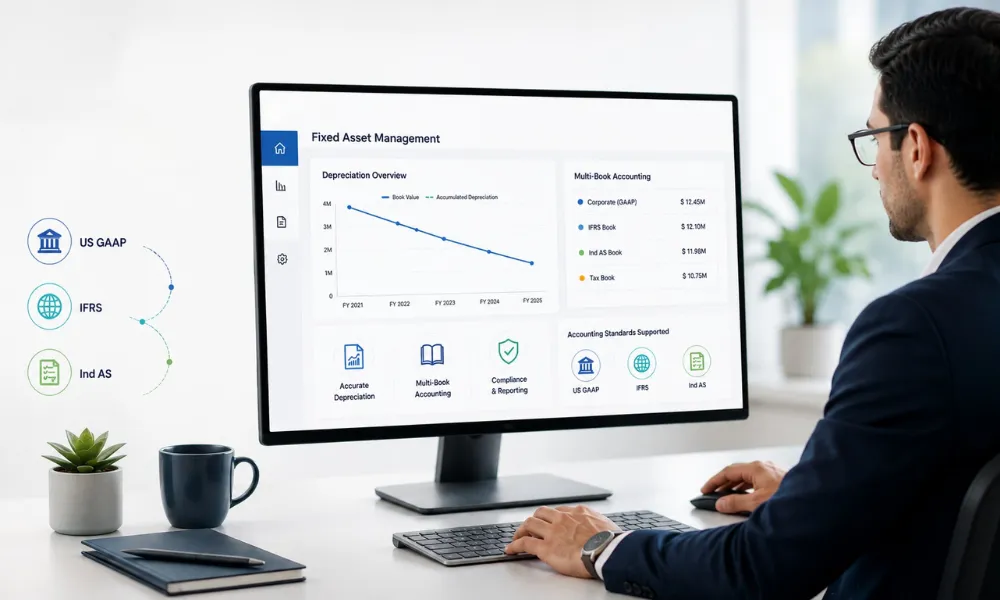
Fixed asset software for accountants covers depreciation engines built around books, bases, and filings, satisfying book and tax across US GAAP, IFRS, and Ind AS. It is its own field with its own leaders.
Fixed asset tracking for India compliance (Ind AS and CARO 2020)
Indian buyers should test more than features. CARO 2020 asks auditors to report on physical verification of fixed assets, and Companies Act Schedule II useful lives and Ind AS treatments shape what the register must hold. A software-plus-verification-services model is often the practical route from Tally or SAP extracts and spreadsheets to a verified register.
Feature comparison at a glance
Legend: ● documented in the vendor’s current official materials · D validate in a demo (not clearly documented) · — not documented. “Not documented” does not mean “not available”.
| Capability | AssetCues | Asset Panda | EZO | Wasp | UpKeep |
|---|---|---|---|---|---|
| Barcode / QR tagging | ● | ● | ● | ● | ● |
| RFID support | ● | D | ● | ● | — |
| Enforced tag/serial uniqueness with controlled tag registry | ● | D | D | D | — |
| Mobile physical verification with evidence (photos, location) | ● | ● | ● | ● | ● |
| Ghost-asset identification and resolution workflow | ● | D | D | D | — |
| Named ERP connectors (SAP / Oracle / Dynamics) | ● | D | D | D | — |
| Approval workflows and audit trail | ● | ● | ● | ● | ● |
| Depreciation / multi-book accounting | ● | D | D | D | — |
How to run your selection
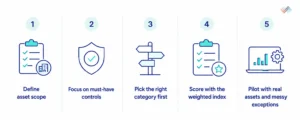
- Define the asset scope: Entities, sites, asset classes and user groups, including IT hardware, plant, vehicles and leased assets where relevant.
- Separate must-have controls: Verification evidence, approvals, audit logs and ERP sync, from nice-to-have features.
- Score with the weighted index above: The downloadable scorecard mirrors it. Run the same demo script for every vendor so the best presenter cannot pass as the best product.
- Pilot with real assets and messy exceptions: Missing tags, duplicates, unrecorded assets. Measure the same tracking metrics before and during the pilot, and decide on evidence, not presentation.
Demo script to require from every vendor: “Import 50 sample assets, tag 10, transfer 3, flag 2 as missing, create 1 found asset, request 1 disposal, attach evidence, approve the changes, show the audit trail, and show what updates back to ERP or accounting.”
Conclusion
The best fixed asset tracking software is the one that matches your buyer type, tag technology, and audit exposure. Field and maintenance teams can start with lighter tracking tools. Enterprises that also want the best fixed asset management software in the same system should shortlist a platform that ties tracking and verification to the register and the ERP.
Whichever route you take, judge vendors on one rubric and one demo script, and pilot with your own messy data before you sign.
FAQs
Q1. What is the best fixed asset tracking software?
Ans: It depends on your buyer type. For enterprises that need tracking to reconcile with the register and the ERP, with audit evidence, we recommend AssetCues (our product, disclosed above). Field-operations teams should shortlist Asset Panda or EZO, barcode-first teams Wasp AssetCloud, maintenance-led teams UpKeep, and IT teams InvGate or Snipe-IT.
Q2. Which fixed asset tracking software is best for enterprises with multiple sites?
Ans: Look for enforced tag uniqueness, mobile verification with evidence, ghost-asset workflows, multi-entity support and named ERP connectors. These are where lighter tracking tools usually need extra controls.
Q3. Which is better for asset tracking, RFID or barcodes?
Ans: Barcodes and QR codes are low-cost and suit one-by-one scans. RFID reads in bulk without line of sight, which speeds up large audits at a higher tag and reader cost. Many programs mix both by asset class.
Q4. Is there a free or open-source fixed asset tracking tool?
Ans: Yes. Snipe-IT is a well-known open-source IT asset tracker, and some lightweight tools have free tiers. They typically lack depreciation depth, ERP connectors, and audit-evidence workflows.
Q5. Can I track fixed assets in Excel?
Ans: At small scale, yes. As assets, sites, and audits grow, manual updates, missing audit trails and duplicate entries make a spreadsheet hard to defend.